Measure the part that gets in the way
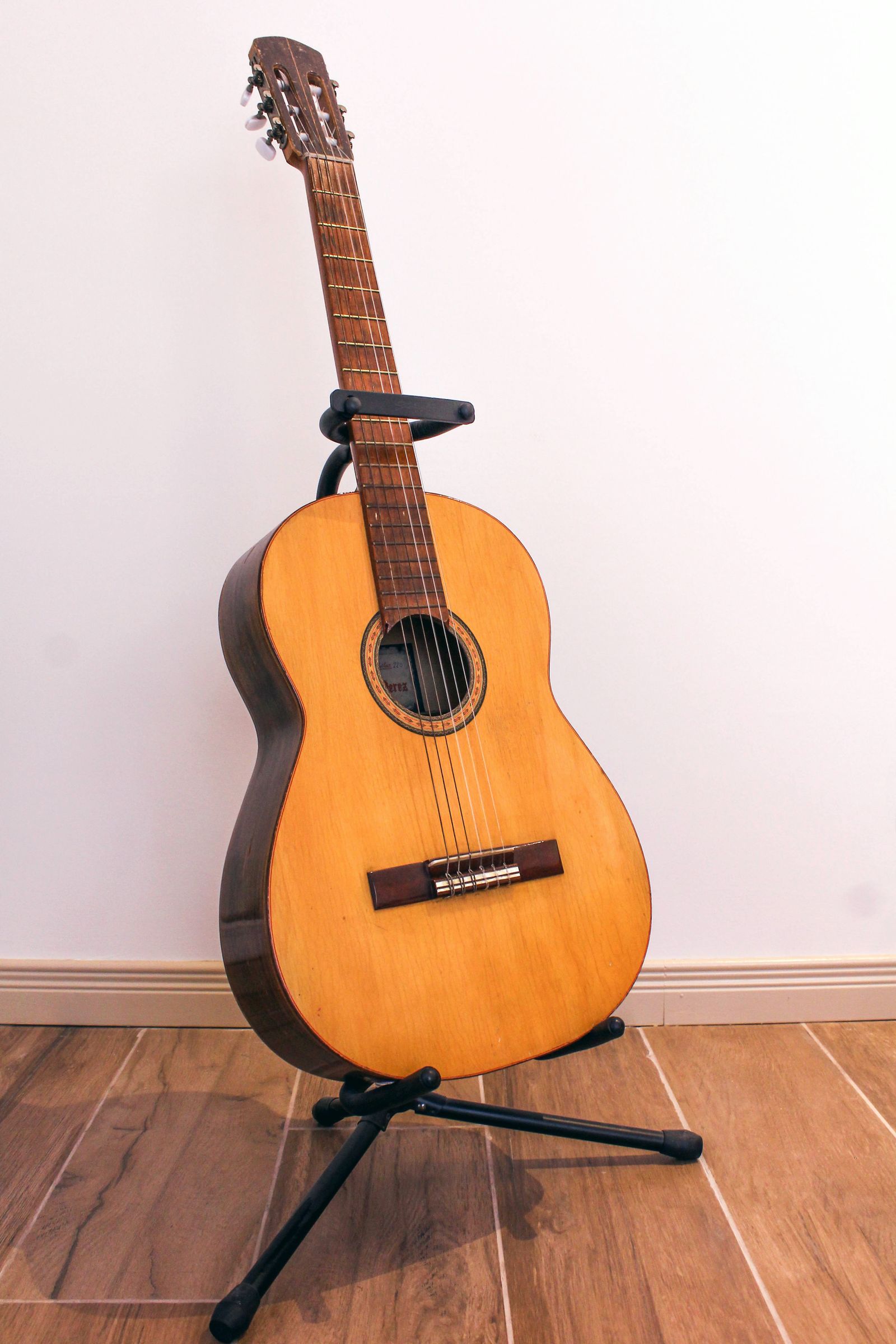
A large lower bout can move the neck farther away when the guitar rests on your leg. Body depth determines how far your picking arm must reach over the top. Overall length matters for carrying and storage but says relatively little about either of those playing sensations. When shopping online, look for all three dimensions rather than treating a photograph as a reliable guide to scale.
Names such as concert, auditorium and dreadnought are not a universal measurement system. Compare the actual specifications of the models on your shortlist. Taylor, for example, publishes body-shape information within its own range; that is useful for comparing those instruments, not a promise that every other maker uses identical proportions.
A smaller body is a choice, not a stage
A compact guitar can be a permanent instrument for an adult player. It need not be viewed as something to outgrow. Equally, a full-size body may feel comfortable to a smaller player when the chair and holding position are appropriate. Avoid choosing solely from a height chart when you can try the guitar in person.
Play the same short passage on different sizes, first quietly and then at the volume you normally use at home. Listen for the balance you want rather than assuming that more bass or more projection always helps. In a shared room, a guitar that responds pleasantly to a light touch may be a better match than one you only enjoy when strumming hard.
Account for the room around it
Check whether the headstock or body approaches a desk, wall or chair arm during normal movement. An armless chair is often easier to arrange than changing the guitar to accommodate a restrictive seat. A stand also needs floor space beyond the instrument silhouette; its legs should not occupy the route through the room.
If the guitar travels between rooms every day, compare the weight and handle position of the fitted case as well as the guitar itself. A comfortable playing size can still come in a cumbersome case. Before ordering a bag separately, confirm internal depth and body dimensions rather than relying on a broad acoustic-guitar label.
The final comparison should happen over several minutes. Initial novelty can disguise a raised shoulder or awkward wrist. Put the guitar down, relax, and return to it. If one shape consistently lets you settle into position more easily, that is useful evidence even when another model has a more imposing appearance.