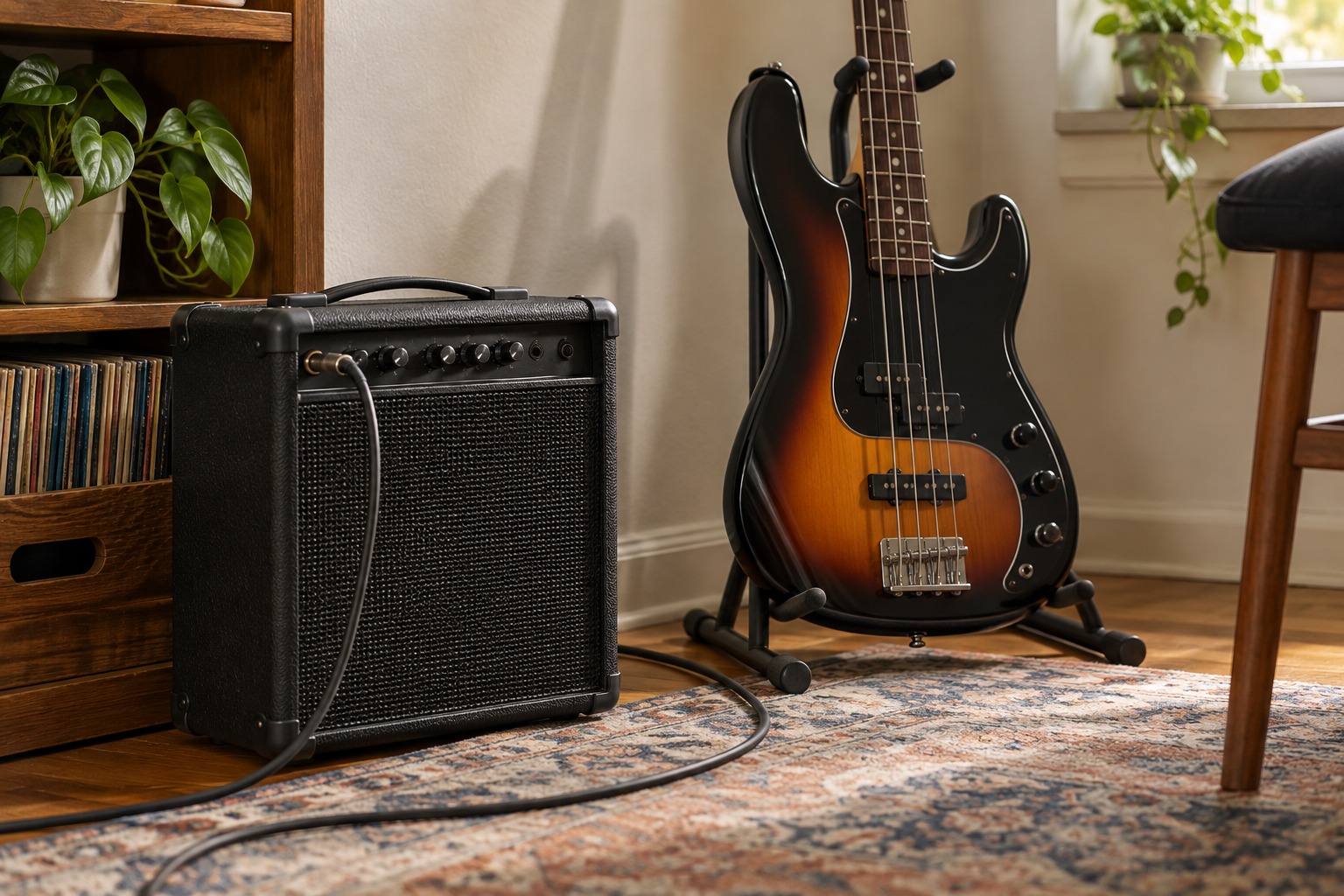
Start with the instrument input
Read the input guidance for your bass and amplifier. Some amps provide a pad or separate input setting for stronger signals. Do not assume that a bass with active electronics always needs one particular switch position; use the manufacturer's procedure and listen for clean operation at the input. Begin with conservative levels when connecting equipment.
Separate input gain from final listening volume where the amp offers both. Turning down the speaker volume may not cure an overloaded input stage. If the sound is unexpectedly distorted, simplify the chain by removing pedals and check the instrument and input settings before deciding that the speaker is at fault.
Check the practice sources
A backing track can arrive through an auxiliary socket, Bluetooth connection or another supported route. Verify which is available and whether its level is controlled separately from the bass. If the track is coming from a phone, check that the required cable or adapter works with that device rather than assuming the amp package includes everything.
Headphone use is a separate feature to test. Confirm that the speaker mutes if that is what you need, and that the bass and backing track both reach the headphones. Try the volume adjustment at a comfortable level. Do not connect headphones to a speaker output or use an arbitrary adapter to make an unsuitable socket fit.
Listen where the amp will be used
Place the amp securely with the clearances required by its manual. A small room can make some notes seem much louder than others, so try more than a single open string. Play the passage you normally practice and move your listening position slightly before making major tone changes. The amp and room are being heard together.
Think about access to the controls and cable routes. A unit beneath a desk may fit physically but make it awkward to adjust gain or disconnect headphones. Keep the instrument cable out of the chair's path, and avoid using a shelf that cannot safely support the amp.
For a first purchase, list the tasks that must work: clean practice at low level, audible backing tracks, headphone listening or a simple line output. Check each task in the manual and, where possible, in a demonstration. A larger feature list is not a substitute for those ordinary connections working clearly.