Identify what touches your skin
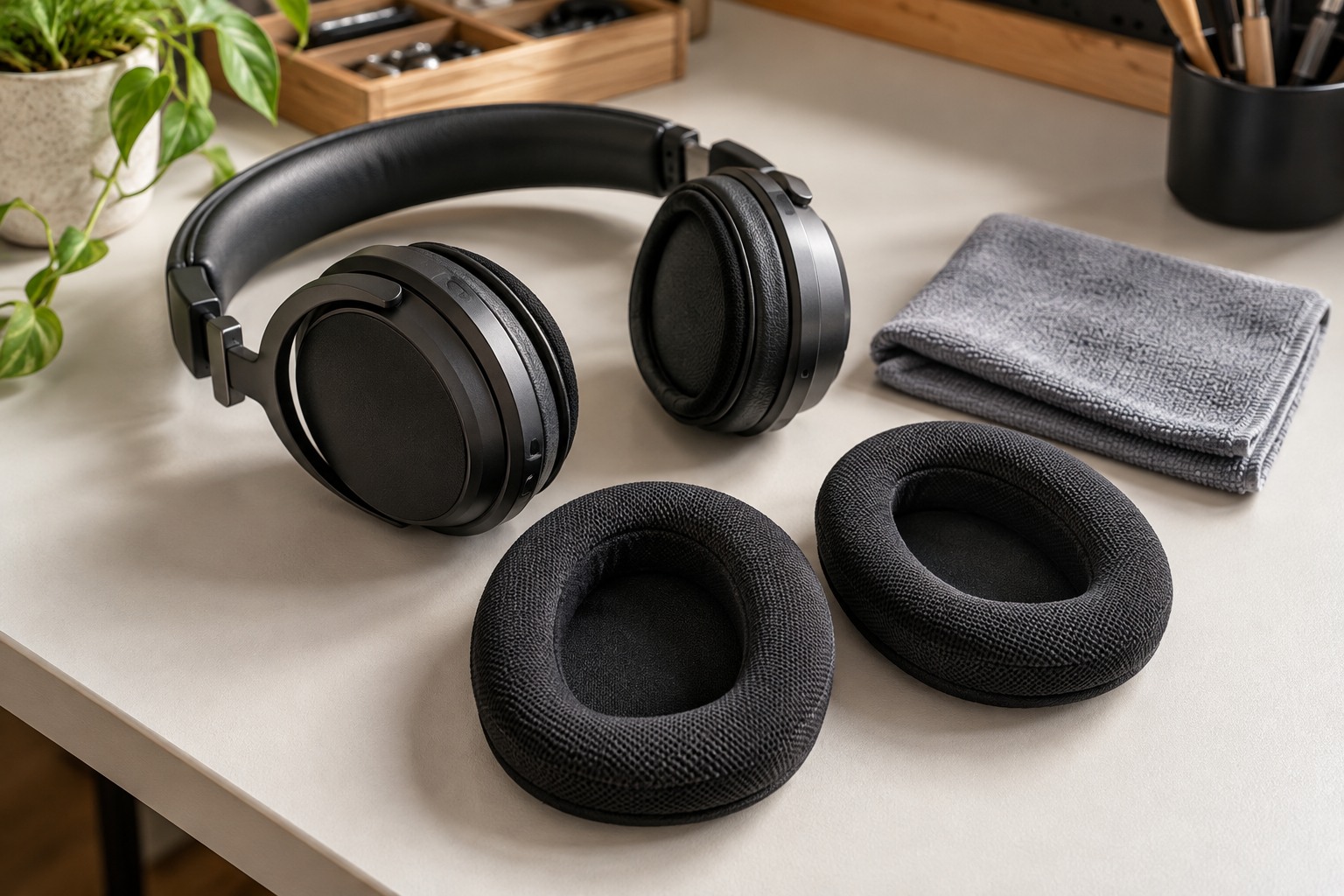
Look up the installed pads rather than relying only on the headphone model. A previous owner may have fitted aftermarket cushions, and those can have a different covering or attachment. Record whether the surface is fabric, leather, synthetic leather or another specified material. The inner foam and any adhesive layers also matter, even when they are hidden by the covering.
Inspect the cushions in good light before cleaning. Flaking surfaces, split seams and flattened foam are different problems from loose dust. Cleaning cannot restore a torn outer layer or rebuild a collapsed pad. If replacement is needed, check the exact fitting and intended material instead of ordering by outside diameter alone.
Use the instructions for that pad
Beyerdynamic's care guidance, for example, specifies a soft damp cloth with water and no detergents for the headphones covered by its instructions, and warns against vacuum cleaning. This is a useful reminder that a household cleaning tool is not automatically suitable for delicate audio equipment. Other models may specify a different approach.
Remove pads only when the manufacturer describes them as removable and explains the attachment. Some stretch over a rim, others use a mounting ring, and some require a different procedure. Pulling harder because a cushion looks detachable can damage a fitting. Keep any separately removable lining identified so that it can be returned to its proper position.
Prepare a clean work surface and separate the headphone from cables or power as its instructions require. Use the specified amount of moisture, avoid introducing liquid into the driver area and allow parts to dry as directed before reassembly. Do not substitute a strong household cleaner merely because it removes visible marks quickly.
Check the result before wearing
Refit the pads evenly and inspect the full edge, including the area near the cable entry. A folded lip or partly engaged ring can leave the cushion loose. Check the headphone's fit without playing anything first; the pad should not slip when the earcup is gently repositioned.
Keep the cleaning cloth itself clean and free of grit. Store it separately from cloths used for furniture polish or oily tools. If a fabric pad remains stained but intact, decide whether its condition is acceptable rather than escalating to an unapproved chemical treatment. The manufacturer's replacement information can be more useful than another cleaning experiment.
Make occasional inspection part of putting the headphones away. Let damp cushions dry according to their care instructions before placing the set in a closed case. A simple routine that preserves the pad's material and attachment is preferable to an aggressive deep clean followed by uncertain reassembly.