Measure the listening area
Sit in the chair at its normal height and mark the available space on either side of the screen. Include the speaker’s depth, rear connectors, and any clearance specified by the manufacturer. A cabinet that fits on paper may leave its front edge behind a large display or force one speaker into a corner. Both are reasons to reconsider the layout before choosing a model.
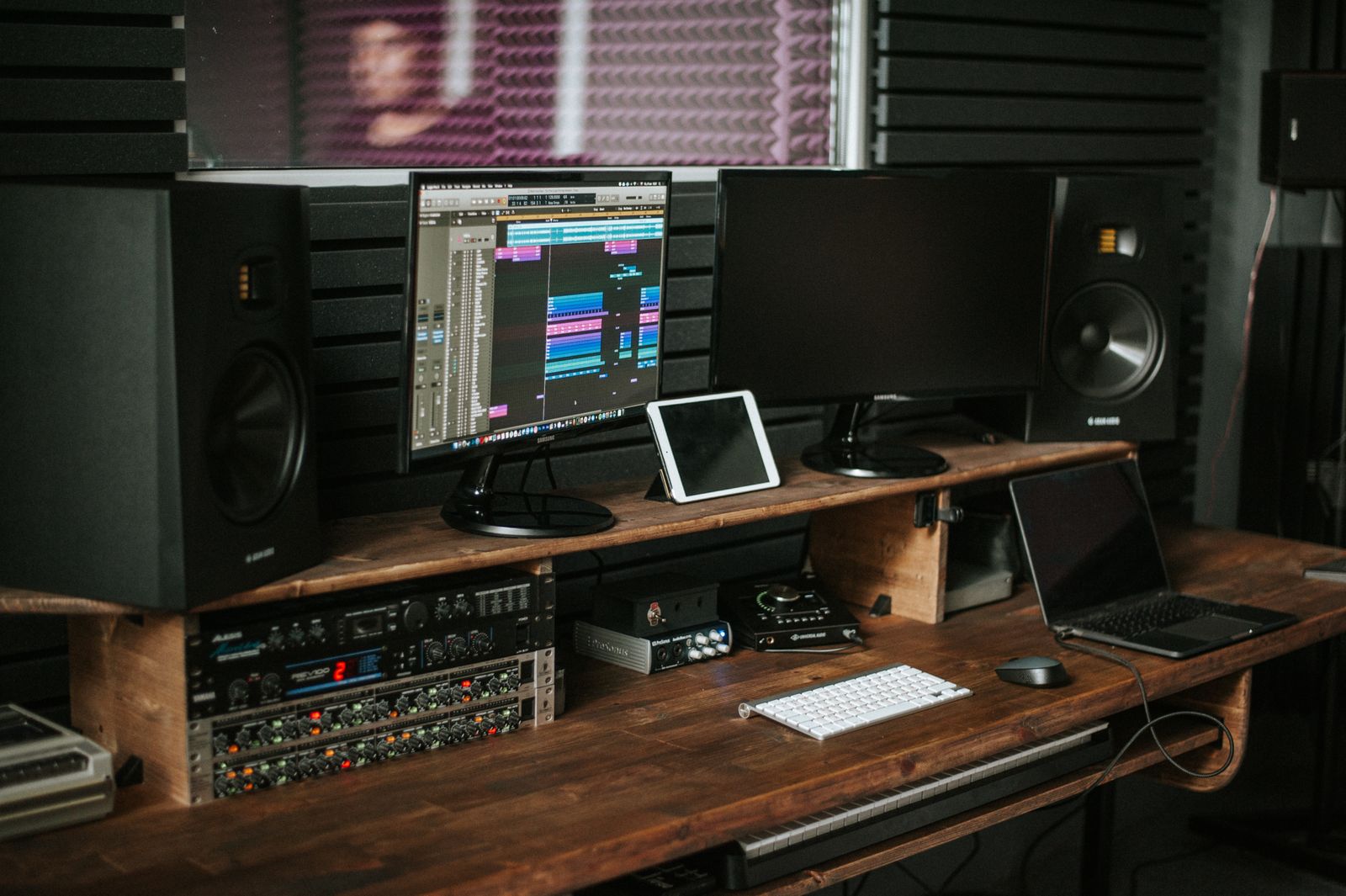
For a stereo pair, aim for a reasonably symmetrical arrangement around your listening position. Genelec’s placement guidance uses an equilateral listening triangle as a starting point. This means considering the distance between speakers as well as the distance from each speaker to you. On a narrow desk, bringing the pair closer together may be more sensible than pushing them to distant room corners.
Choose the inputs around your sources
List the devices you expect to connect: computer, phone, interface, or turntable. Check the speaker’s actual input types and how you switch between them. A USB socket might be for audio, power, or service, so read its description. A wireless connection is convenient for casual playback but should not be assumed suitable for monitoring a live instrument.
Decide where volume control belongs. A knob hidden behind the right speaker is inconvenient if that speaker sits against a wall. A front control or remote may suit the room better. If you plan to use an audio interface, confirm the output-to-input connection and whether its main level knob will control the complete speaker pair.
Leave space for ordinary desk use
Put cardboard footprints on the desk before ordering. Open a notebook, move the mouse, and reach for the screen controls. Add the proposed stands to the mock-up. Speaker bases should remain fully supported, and cables should not cross the keyboard area or pull when the desk is raised. Keep ventilation openings clear as required by the product manual.
Listen at the level you would actually use in that room. A speaker that impresses during a loud demonstration may be awkward when you need small adjustments late at night. Include speech and sparse acoustic music in the trial, and check whether the controls allow a useful quiet range. Room size and close listening distance are more relevant than a headline wattage figure.