Start with the contact points
A headphone touches more than the top of your head. The band carries weight, the cups press around or against the ears, and the cable can pull from one side. Adjust the band so both cups sit evenly before judging the padding. If one cup sits higher, a soft cushion can still concentrate pressure in an uncomfortable place.
Wear your usual glasses during the trial. Put your hair as you normally wear it and sit in your actual listening position. A pair that feels pleasant while standing at a shop counter may shift when you lean over a keyboard. Turn your head gently and look down at a notebook. You should not need to keep one hand near the cups to stop them moving.
Give the shape time to reveal itself
Listen at a modest level and pay attention to the fit after several songs. Look for a narrow pressure point on the crown, contact between the ear and the inside of the cup, or a pinch beside the glasses arms. These are different problems. Increasing the headband length might relieve crown pressure while making the cups sit too low, so repeat the complete fit check after each adjustment.
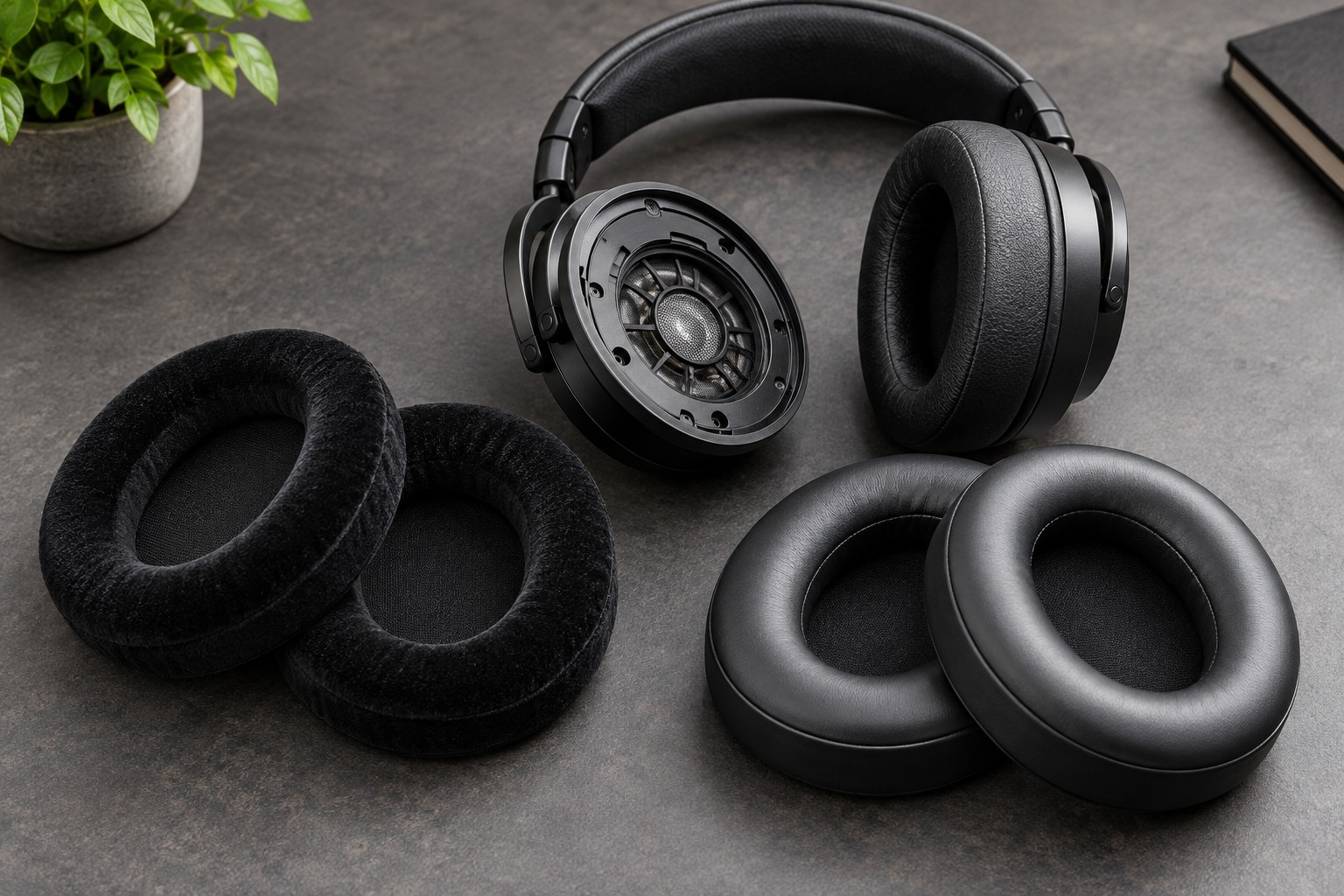
Compare the available ear opening rather than only the outside dimensions. Deep padding can reduce usable space if its inner edge slopes inward. Ask whether the display pair has worn pads: a softened demonstration pair may not feel like a new boxed example. Avoid bending a headband beyond the maker’s instructions in an attempt to force a fit.
Account for the rest of the setup
A long heavy cable dragging off the desk can make an otherwise balanced pair feel uneven. Leave enough slack for the chair to move and route the cable away from wheels. Wireless headphones remove that cable but still have physical weight and controls to consider. Check whether reaching for a button pushes the cup into your ear.
Choose a return arrangement that allows a meaningful fit check, subject to the seller’s hygiene conditions. Keep packaging until you have assessed the headphones in ordinary use. Comfort cannot be inferred from price or a photograph, and enduring a persistent pressure point is not a useful way to evaluate sound. Take breaks and remove the headphones when they become uncomfortable rather than treating a long uninterrupted session as the goal.