Identify the part before removing it
Find the full model name on the headphones, packaging, or purchase record. Include suffixes and generations. Manufacturers may sell visually similar headphones with different pad fittings, while one replacement part may explicitly support several models. Sennheiser’s spare-parts catalog, for example, lists pads by their compatible model families. Use that kind of explicit compatibility listing instead of guessing from the outer shape.
Take photographs of the existing pad and its orientation before starting. Some pads tuck a flexible lip into a groove; others attach to a plastic mounting ring. Read the replacement instructions first so you know whether the old ring must be reused. Pulling a clipped assembly as if it were a stretch-fit pad can damage a part that was meant to remain intact.
Look beyond the diameter
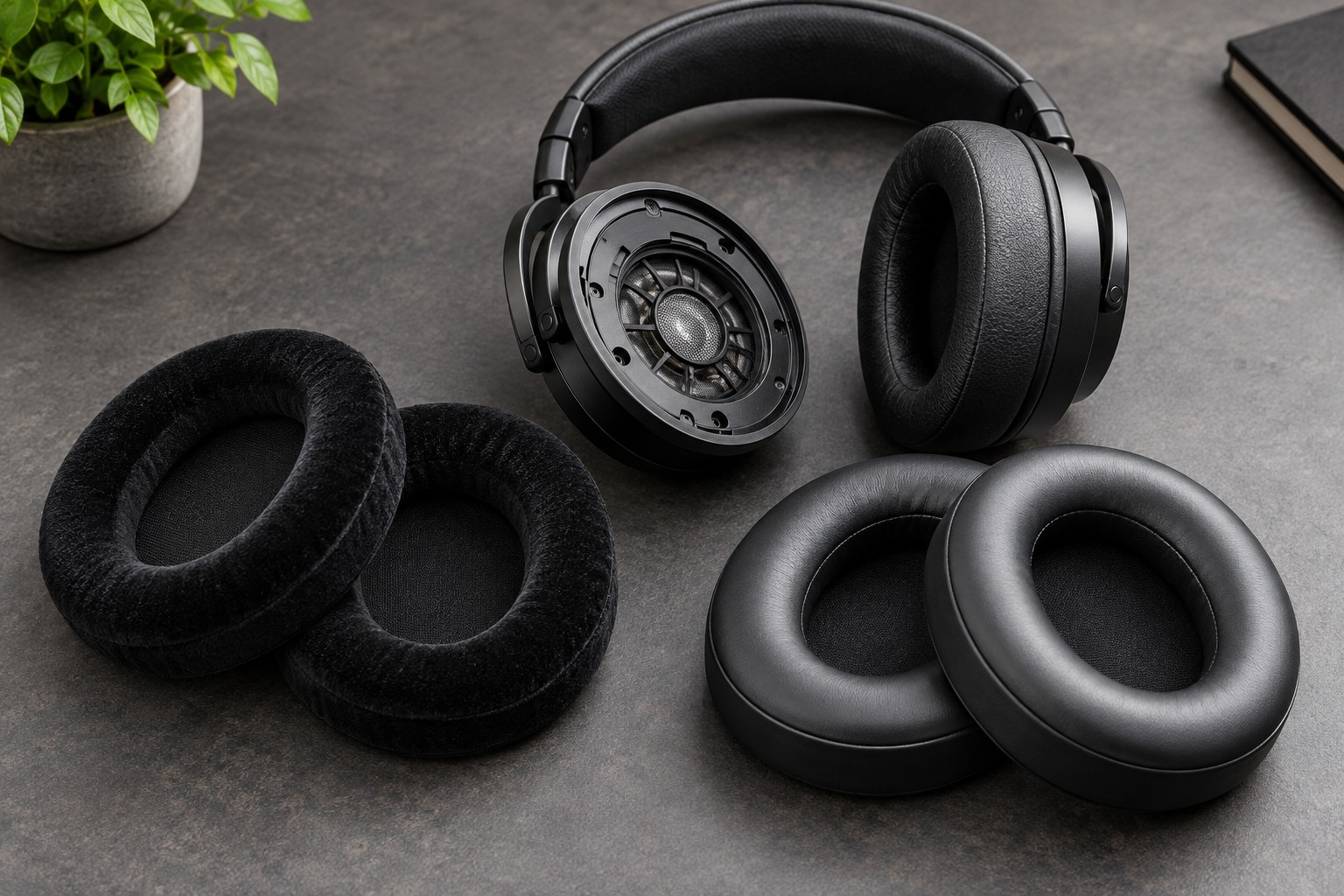
Compare the inner opening, cushion depth, material, and attachment structure. A seller’s outside measurements tell you only part of the story. A thick replacement can move the driver farther from the ear, while a different covering can change the seal. Treat third-party material changes as a different fit and sound arrangement, not automatically an upgrade.
Check whether the listing includes a pair or a single pad. Also inspect any foam insert supplied with it and follow the maker’s guidance on which pieces are replaced. Do not stack old and new inserts merely because both fit. If the original part has an orientation marker, preserve that orientation when installing the replacement.
Install and reassess
Work on a clean surface with the headphones disconnected. Keep small mounting parts together and use only the removal method described for that model. After fitting, check the entire perimeter for an unseated section. A pad can look correct from above while part of its lip remains outside the groove underneath.
Listen to familiar speech and music at a comfortable level, then check fit with glasses and normal head movement. If one side sounds different, first compare seating and pad orientation rather than immediately changing equalization. Keep the part number with your purchase record for next time. Replacement availability is also worth considering before buying new headphones, especially if the pair will be used frequently.