Distinguish resistance from sensitivity
Weighted or hammer-action descriptions concern the physical feel of the keys. Touch sensitivity concerns how the sound responds to playing velocity. An instrument can have velocity-sensitive keys without a piano-like weighted action. Yamaha's action guide also distinguishes graded weighting, where resistance varies across the keyboard. Read these terms separately rather than treating them as synonyms.
If your lessons involve an acoustic piano, ask the teacher what kind of home action will support that work. If your main interest is organ or synthesizer parts, a lighter action may be appropriate for different movements. The aim is to match the task, not to assume that the heaviest mechanism is always the most advanced choice.
Try quiet playing first
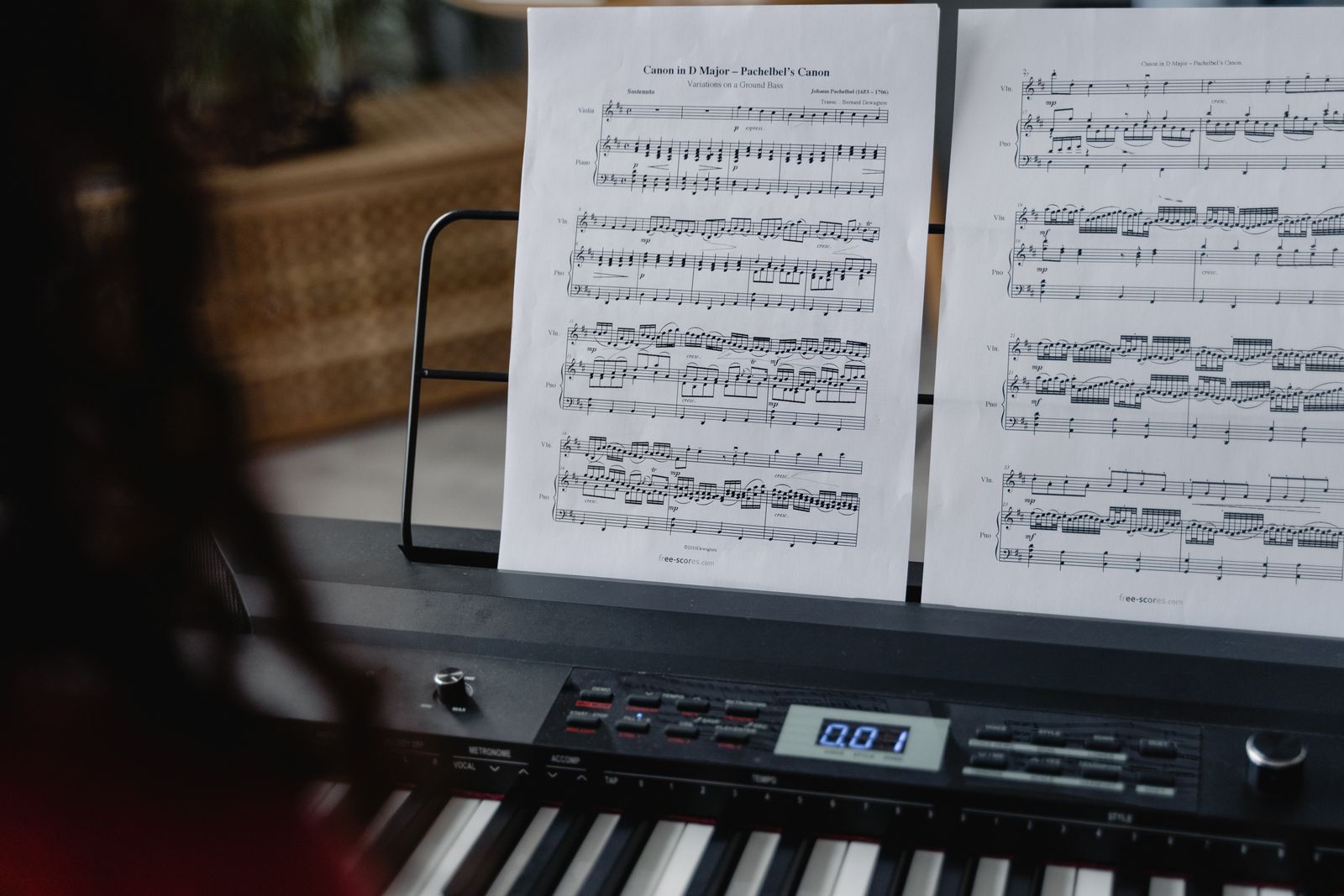
Play a few notes gently and listen for whether you can produce a controlled soft sound. Then increase the force gradually without changing the volume knob. Repeat a note and play a simple chord. A novice does not need a difficult piece to compare whether the response feels predictable.
Use a comfortable listening level and, if possible, the same general piano sound across comparisons. A louder or more reverberant preset can make an instrument seem more impressive without telling you much about the action. Try headphones as well as the built-in speakers when both will be part of daily practice.
The furniture affects the test
Set the bench and keyboard at a workable height before judging the keys. A stand that is too high can make every action feel awkward because the hands approach from the wrong position. Check legroom and pedal placement, and make sure the instrument does not rock under normal playing pressure.
Listen to the mechanical key noise with the volume reduced. Headphones silence the amplified sound for others, but they do not remove the physical movement of the keys. This may matter if the piano shares a room with someone working or sleeping.
Finally, consider the action over a longer trial rather than the first few seconds. Notice whether repeated notes and ordinary chords remain comfortable. Keep the model and action designation in your notes, but record the actual observation too: easier soft notes, unfamiliar rebound or a preference for one surface texture. Those observations are more useful than a simple heavy-versus-light verdict.