Measure beyond the keybed
Take the instrument's full width, front-to-back depth and height at its tallest fixed control. Include knobs, pitch controls and a raised music rest if it will remain attached. Two keyboards with the same key count can have very different cases, so use the manufacturer's dimension drawing and your actual setup together.
Decide whether the cover is for a stationary instrument or for transport. A loose dust cover does not provide the impact protection of a fitted gig bag or case. If the keyboard travels, choose the transport solution separately rather than expecting thicker fabric over the keys to protect exposed controls inside a crowded vehicle.
Check how the edge sits
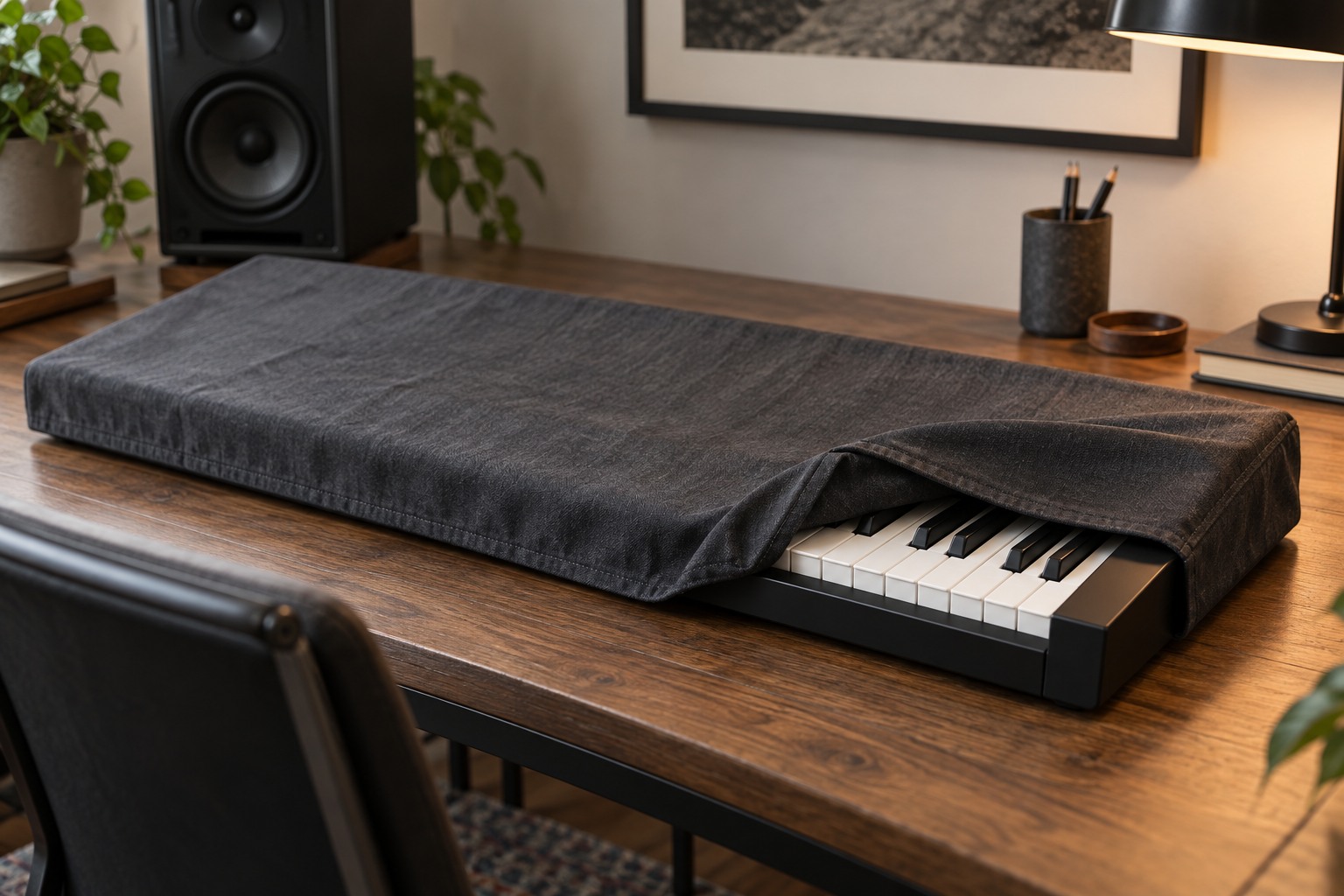
An elastic edge can help a cover stay in place, but it should not pull controls sideways or place pressure on the keys. A draped cover needs enough depth to stay put without hanging into a chair or pedal area. Look for photographs that show the sides and rear rather than only the covered top.
Account for any cables left connected when the instrument is not in use. A cover should not force a connector against the rear panel or bend a lead sharply. Follow the keyboard manufacturer's instructions about power, cooling and covering, and do not treat a fabric cover as suitable during operation unless that use is explicitly allowed.
Consider whether a music rest must be removed and where it will be stored. If covering the instrument involves a complicated dismantling routine, the cover may rarely be used. A suitable fitted shape can be more helpful than an expensive fabric that does not accommodate the everyday arrangement.
Keep the inside as clean as the outside
Check the lining for loose fibers, rough seams or fasteners that could rub against the finish. A plain soft interior is easier to inspect than a heavily decorated one. Follow the cover's cleaning instructions and make sure it is fully dry before placing it back on the instrument.
Choose a dedicated place for the folded cover while playing. Leaving its inner surface on a dirty floor transfers that dirt to the keyboard at the end of the session. Fold it so the inside remains protected, and avoid stacking drinks or cables on it during a rehearsal.
When removing the cover, lift it clear rather than dragging it across knobs and sliders. Inspect the fit again if the setup changes or an accessory is added. A well-chosen cover should be a quick part of finishing a session, with no need to force a corner around a control or compress the instrument to make it fit.