Separate level from mix
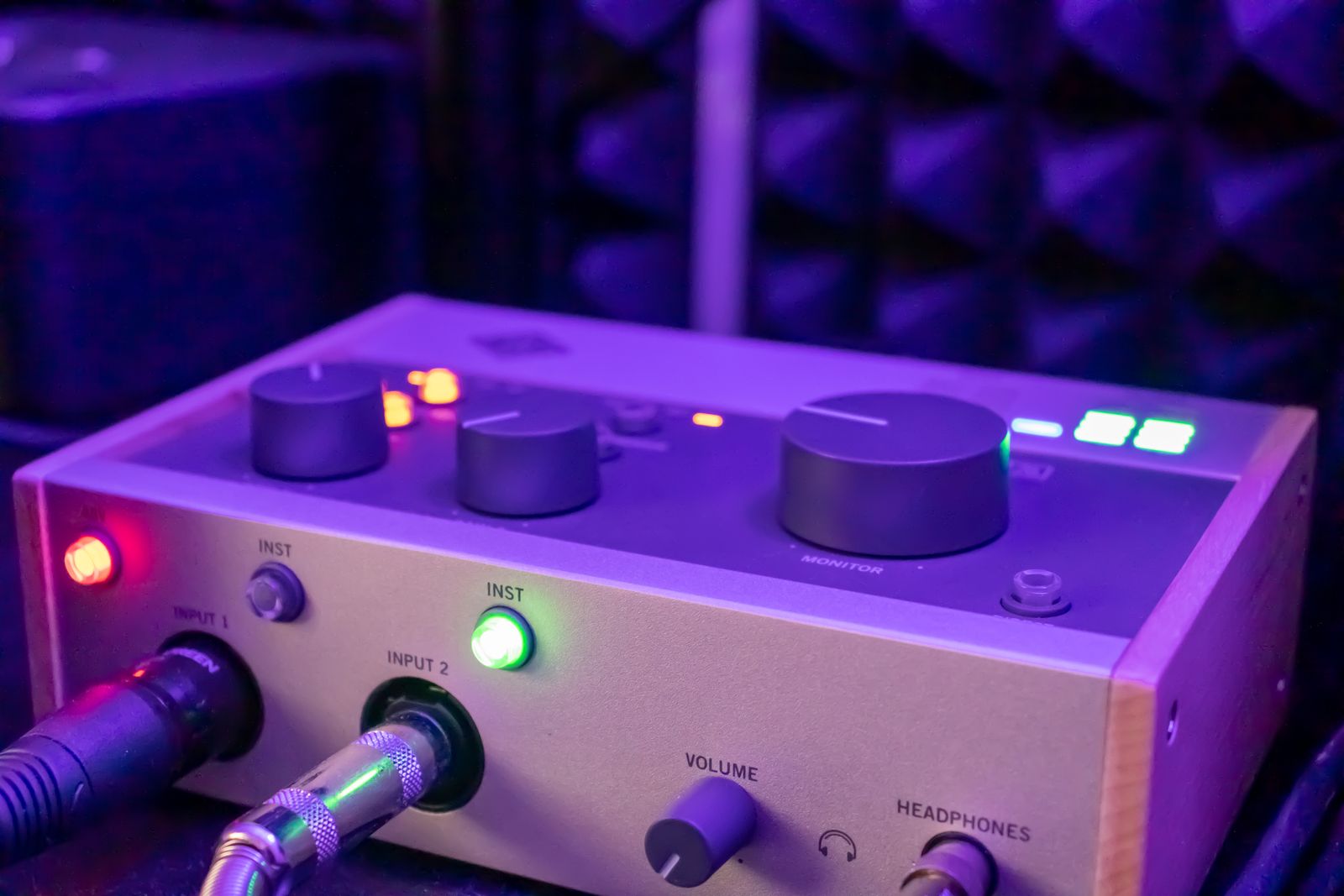
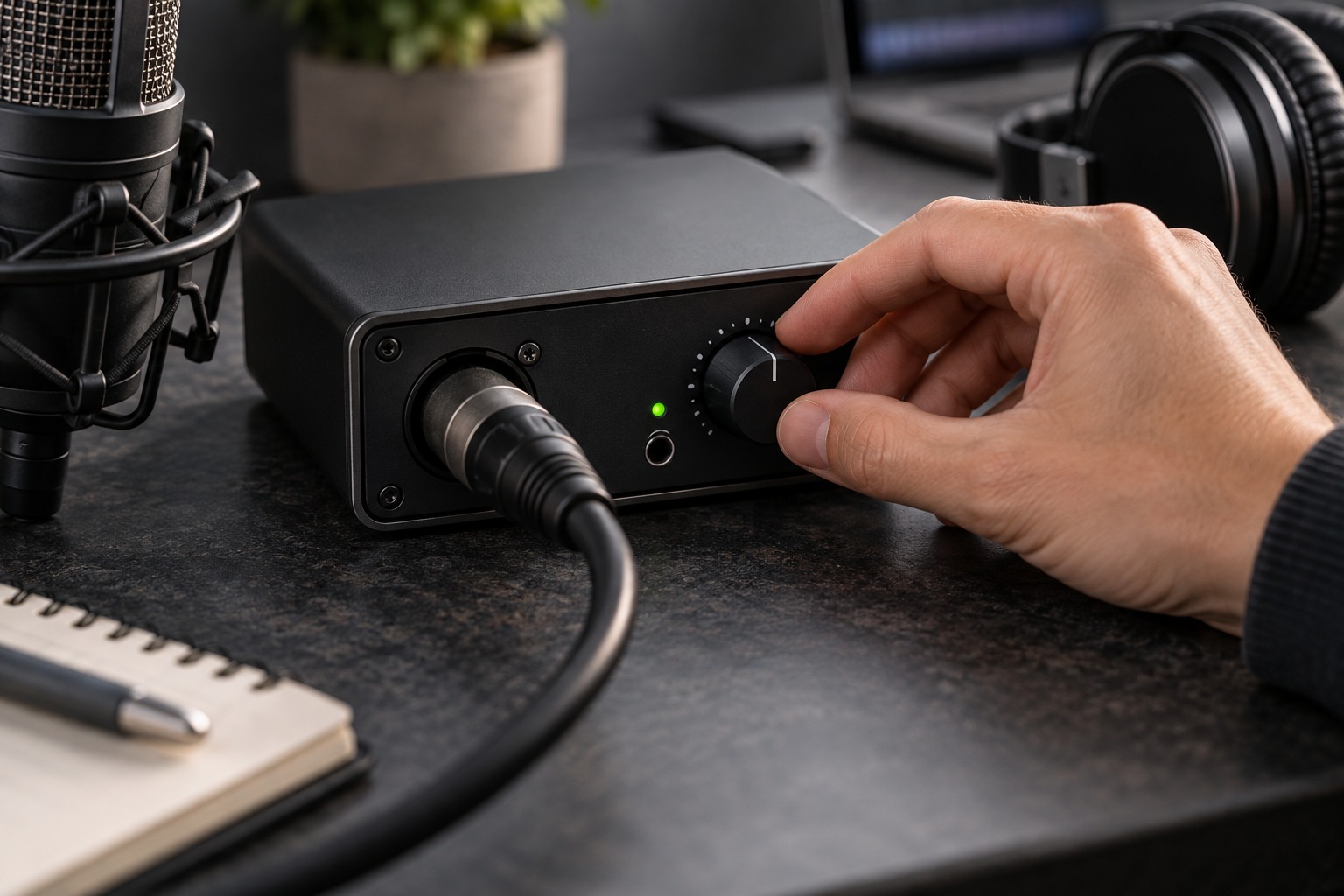
Independent volume controls let each performer choose a comfortable level for the same program. Independent mixes let one performer hear more voice while another hears more instrument or click. Two headphone sockets do not automatically provide both capabilities. Read the interface’s routing information, not just the front-panel photograph.
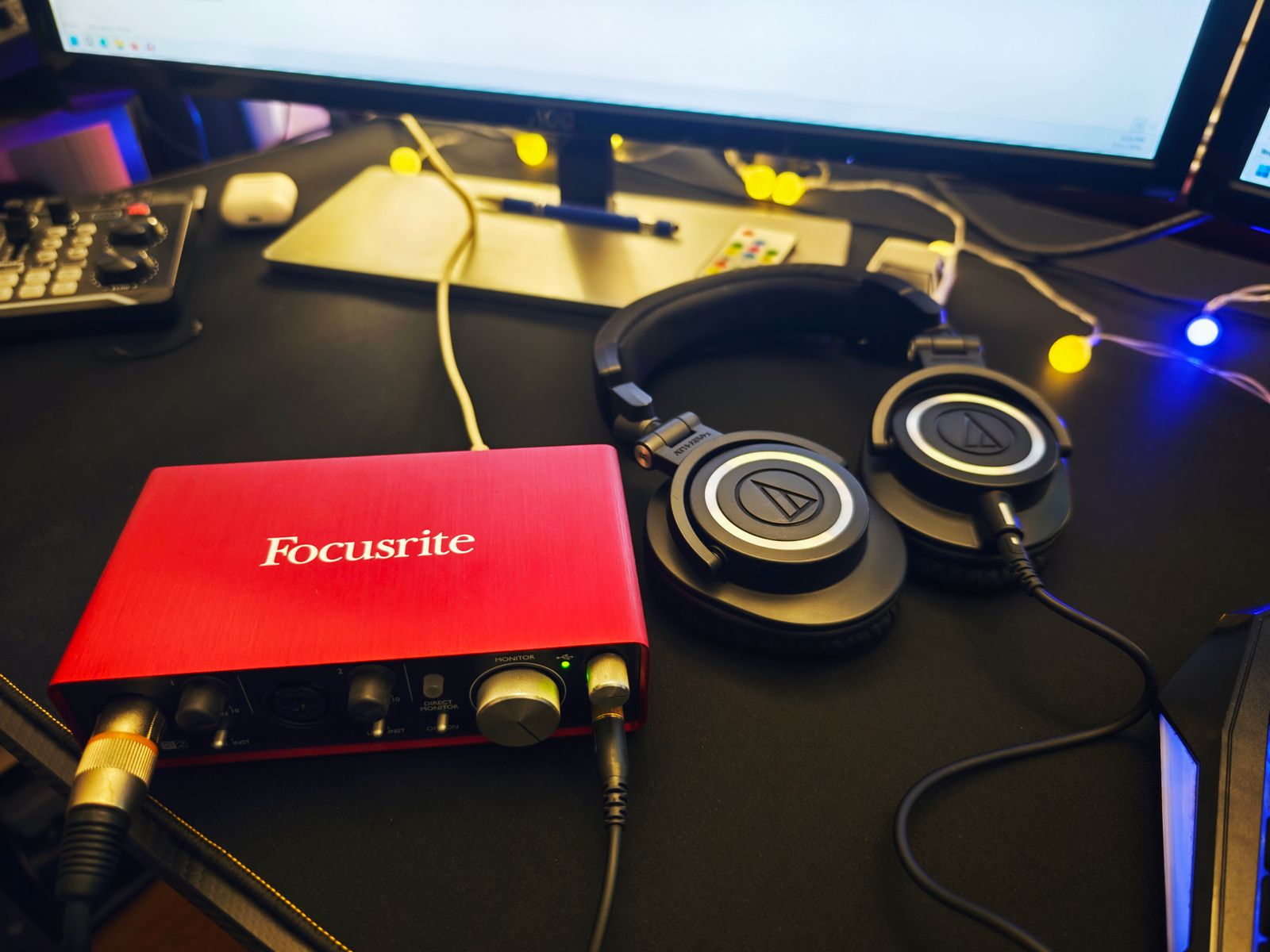
Focusrite’s custom-mix documentation shows that available mixes vary by interface model. Some outputs share a feed while others can receive a separate mix. Map each performer to a physical output and identify which software or hardware controls that output. This makes the requirement concrete before you buy another accessory.
Choose the distribution route
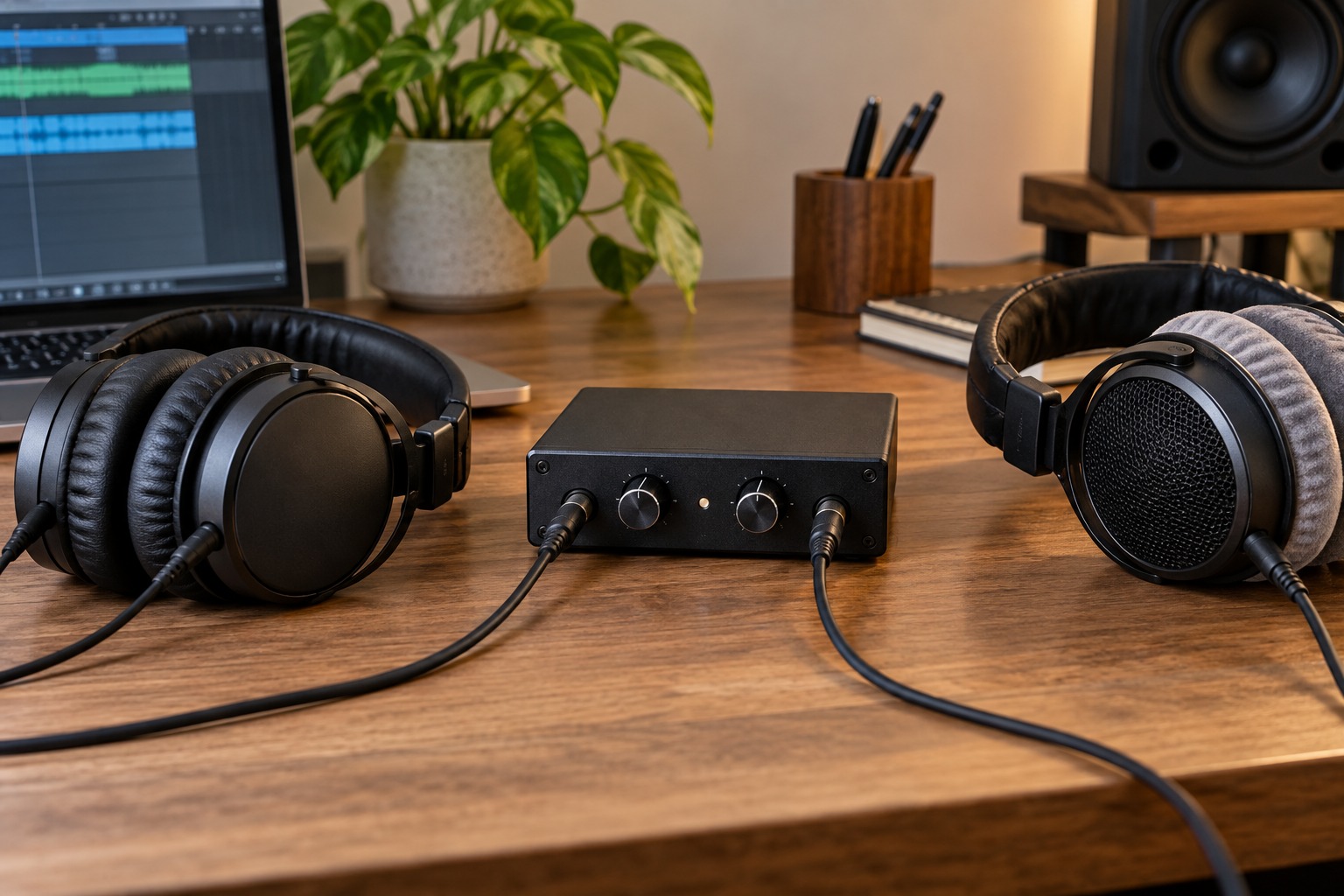
A compatible headphone distribution amplifier can provide several headphone outputs, but its input and routing still need to match the source. Check whether it accepts one common stereo mix or separate feeds. A simple splitter cannot create two independently balanced mixes from one headphone signal. Do not assume an unused line output can drive headphones directly without an appropriate headphone amplifier.
Include the cable route to each performer. Keep leads away from pedals, chair wheels, and instrument movement, and provide enough slack for a natural posture. If extensions are needed, use suitable stereo headphone extensions and test them with the complete setup. A connection that crackles during movement should be resolved before the take.
Build the mix with the performers
Start each headphone level low. Have both performers play or speak while adjusting the backing track, live inputs, and click as needed. Ask about balance rather than simply asking whether the mix is loud enough. A performer struggling to hear one part may need a mix change instead of a higher overall level.
Confirm that neither performer hears a doubled live input from overlapping direct and software monitoring paths. Record a short test, then listen back to distinguish the recording from the headphone mix. Save the routing and label outputs so the next session begins predictably. Comfortable, understandable monitoring supports the performance more effectively than adding sockets without planning what each person will hear.