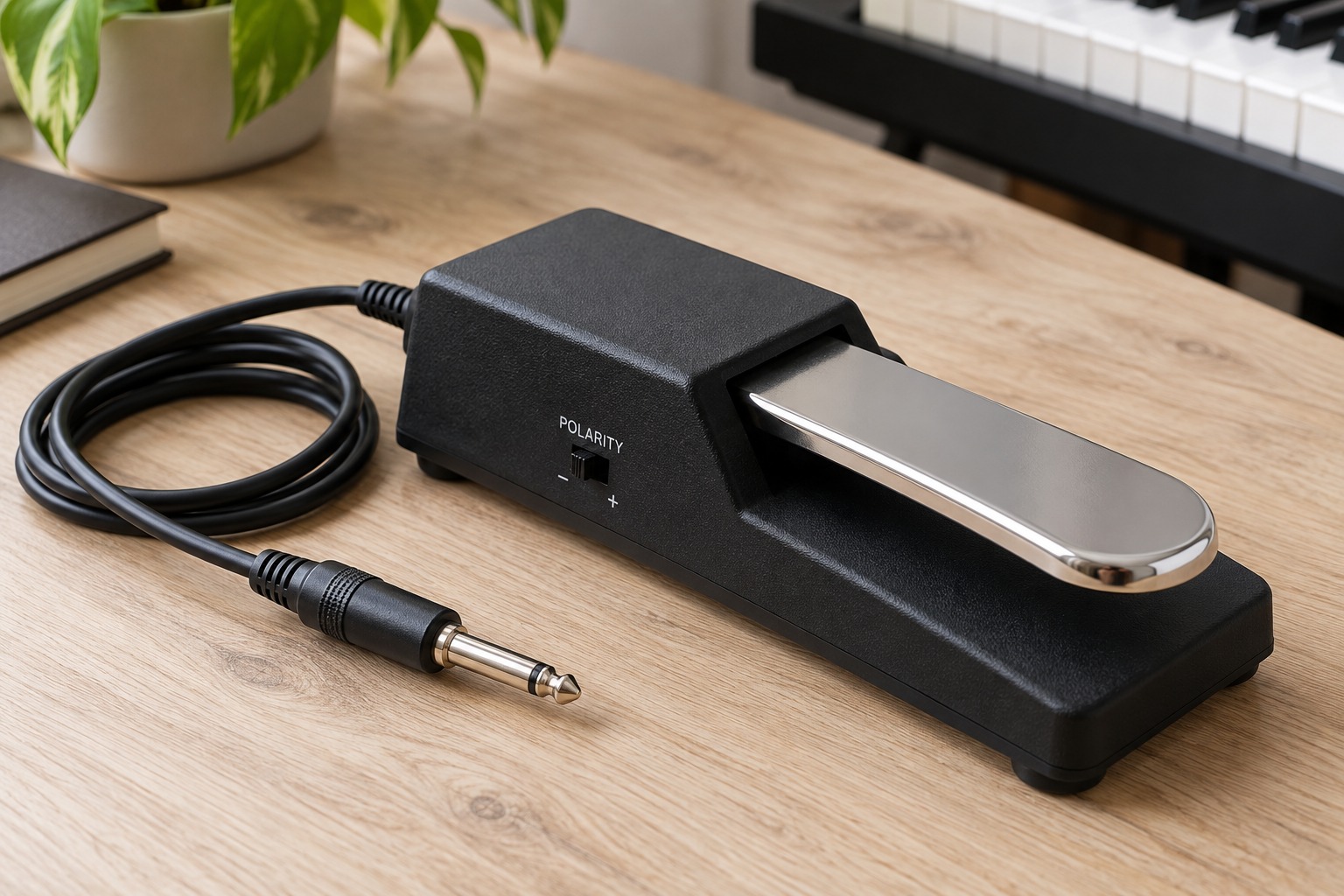
Identify the pedal type
A simple sustain switch and a continuous half-pedal controller are different devices. The keyboard must support the specific type and connection. Start with its recommended accessory list, including any polarity requirement. A quarter-inch plug is a physical format, not a promise that every pedal using it behaves correctly.
Some pedals include a polarity switch; others are fixed. Some keyboards detect the switch state during startup. These are model-specific behaviors, so follow the manual rather than relying on a trick that worked with a different instrument. If a pedal has a switch, note its position before changing anything.
Use a controlled check
Power down or disconnect according to the keyboard's instructions, connect the compatible pedal and restart with the pedal in the specified released state. Select a plain piano sound and play a short chord. Press and release the pedal while listening to whether the notes sustain and stop as intended. Keep the test simple so an unusual sound preset does not obscure the result.
If the behavior remains reversed, inspect the polarity guidance for both products. Do not repeatedly plug and unplug equipment at high volume or force a connector that does not seat correctly. A loose jack or damaged cable can produce an intermittent symptom that is different from consistent reverse operation.
Do not confuse polarity with half-pedaling
A polarity switch does not add continuous sensing to an on/off pedal. If your goal is half-pedaling, both the piano and the pedal must support the appropriate system. A three-pedal unit can also use a dedicated connector that is not interchangeable with a single sustain socket. Choose the exact compatible accessory rather than a visually similar alternative.
Once the electrical behavior is correct, position the pedal where it stays stable and the cable has slack. A pedal sliding away can make release timing feel unreliable even though its switch works properly. Test several normal presses while sitting at your established bench position.
Save the compatible model number and startup procedure with the instrument notes. If the setup is shared, a small label near a polarity switch can prevent accidental changes. When a known-compatible pedal still fails after the documented checks, contact the maker or service provider rather than modifying the wiring without a verified specification.