Choose information that survives a rearrangement
For a cable that stays with a device, a short destination such as left speaker or keyboard USB can be enough. For a shared cable collection, length and connector type are usually more useful than a temporary desk position. Keep the naming scheme consistent so that a second person can understand it without a separate explanation.
Avoid putting passwords, full account details or other private information on equipment labels. A serial number is not normally needed on an ordinary detachable cable. If several leads belong to one portable rig, a simple rig name can distinguish them without making the label crowded or difficult to read.
Place labels where they can be read
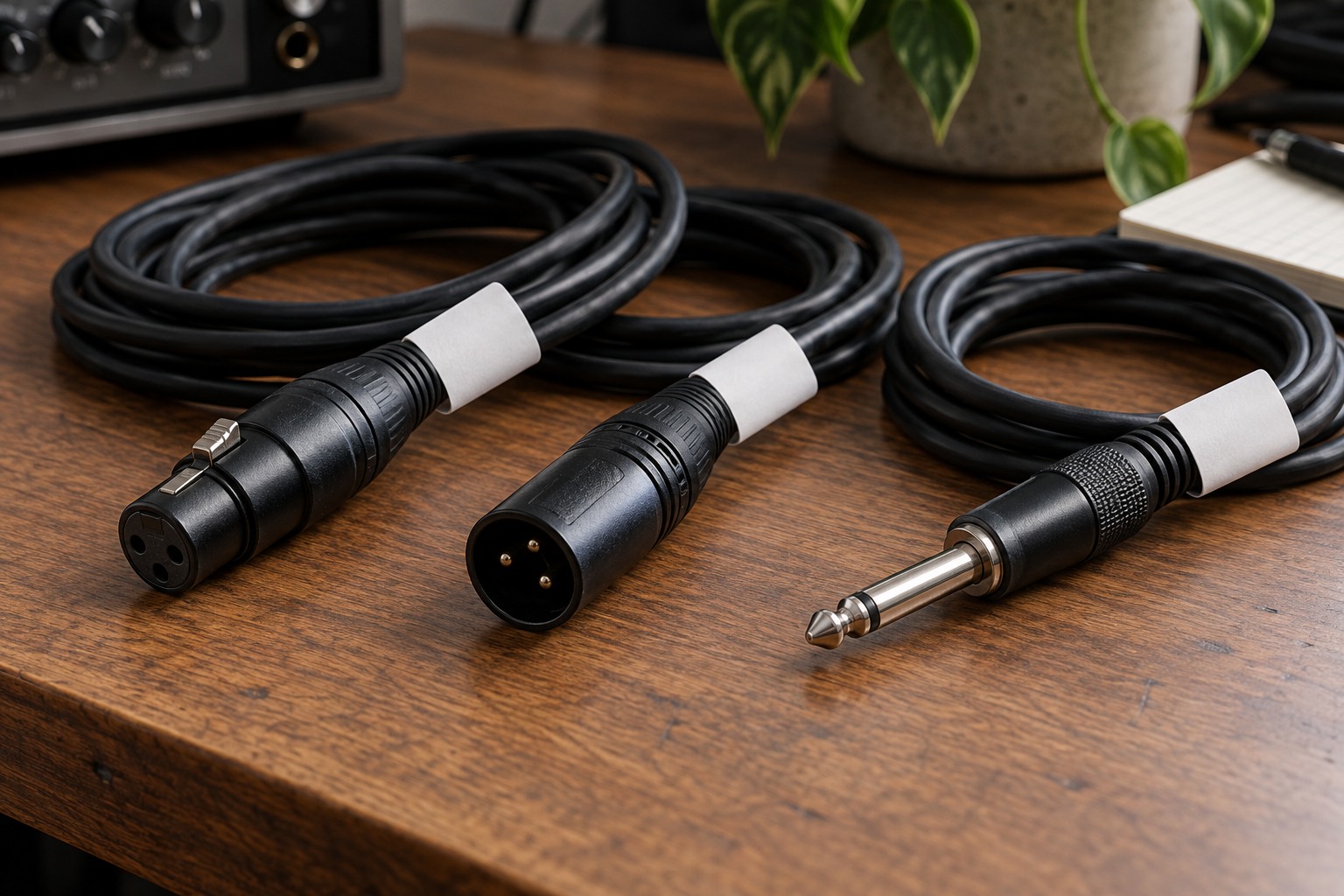
With a cable connected, identify a location near each end that remains visible and does not cover a latch, grip or strain relief. A label wrapped tightly over the flexible section beside a plug can make handling awkward. Leave enough separation that the connector can be unplugged normally.
Compare wraparound markers, flag labels and reusable tags. A flag is readable from more angles but can catch on a pouch lining. A sleeve can be tidy but may need to be fitted before a large connector is attached, making it unsuitable for an existing finished cable. Check the dimensions and installation method before buying a pack.
Use materials specified for the cable jacket and the environment. An adhesive that sticks to a smooth test surface may not remain secure on a textured flexible cable. Try a small number first and inspect for slipping, residue or an edge that catches after the cable has been coiled several times.
Make the two ends agree
Label both ends while the lead is disconnected and clearly identified. If several cables are already installed, trace them one at a time before naming them. Do not assume neighboring plugs belong to neighboring devices. A wrong label is more confusing than no label because it encourages someone to trust the wrong connection.
Keep the wording readable at the angle from which you normally reach the equipment. Small print hidden behind a desk defeats the purpose. Color can provide a quick cue, but include words or a simple identifier as well so the system does not depend on distinguishing similar shades in dim light.
Review the labels when the setup changes. Remove or replace an obsolete destination instead of adding a second contradictory tag. Store spare blank labels with the cable ties and a suitable pen, so a new lead can join the same system immediately. The result should reduce tracing and guessing, not create an additional catalog to maintain.