Choose how you need to follow the pulse
Try the sound at the level and distance you will use. A click that is clear beside a quiet guitar may disappear behind a practice pad. A visual pulse can be useful, but only if it sits within your normal field of view. Avoid placing it where watching the light disrupts the playing position.
If headphones are involved, confirm the output arrangement and start at a low level. Do not keep increasing the click volume to compete with a loud instrument. A teacher can help choose a workable practice setup and decide whether an audible, visual or combined cue is most useful for the exercise.
Make tempo changes deliberate
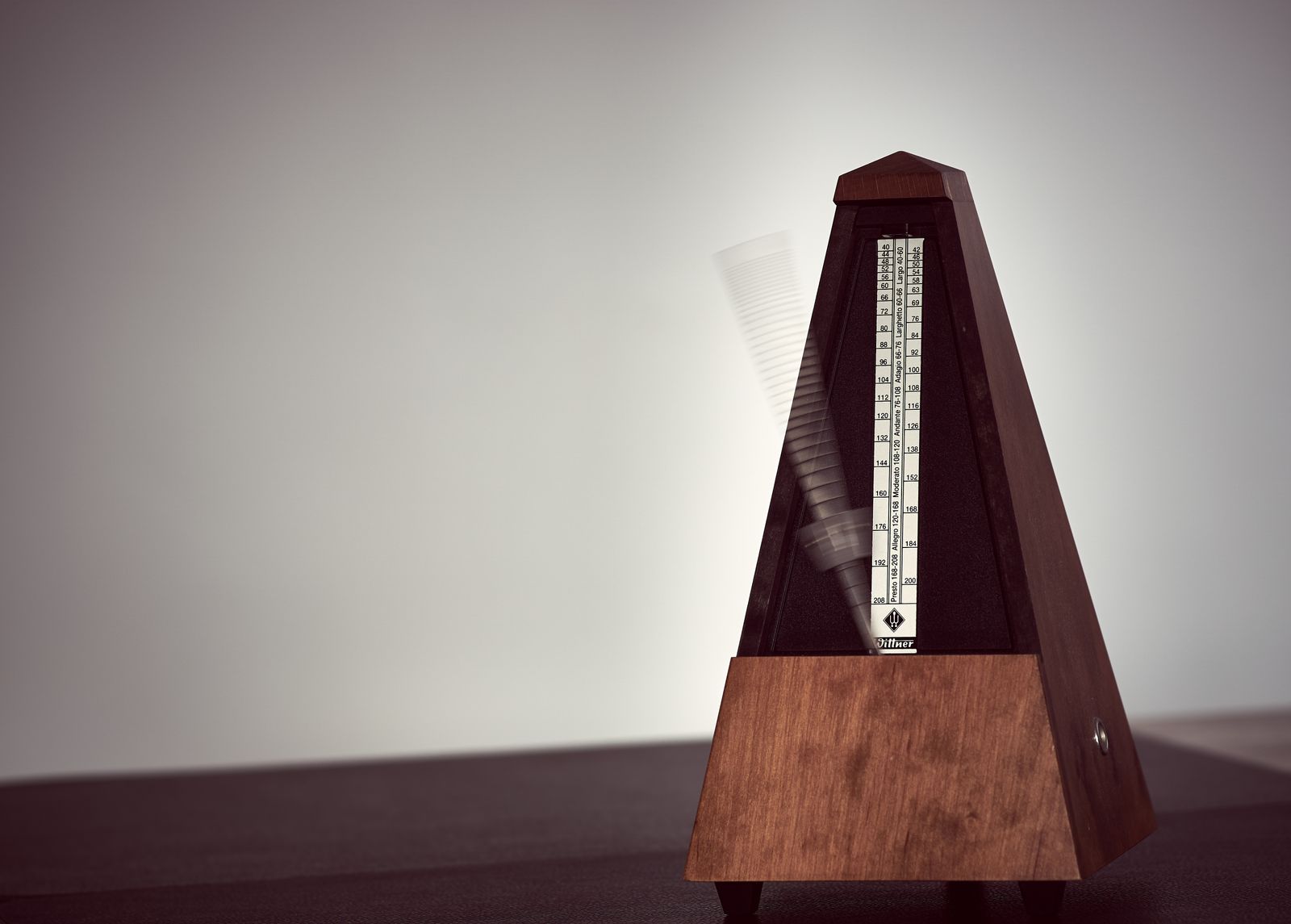
A direct tempo control can be easier to use than a small set of multifunction buttons. Try setting a specific number, changing it slightly and returning to the original value. If you use a phone app, check whether notifications or screen locking interfere with the session. A dedicated device can be appealing when you want fewer distractions, but it also needs batteries or power.
Beat accents and subdivisions serve different purposes. Decide whether you need a simple unaccented pulse, a clear first beat of a measure or smaller divisions within the beat. Set only the features relevant to the task so that several competing clicks do not obscure what you are trying to hear.
Build a short practice routine
Choose a passage small enough to repeat without stopping at every mistake. Begin at a tempo where you can follow the movement comfortably, play a few repetitions and then pause to evaluate. The number on the screen is a record of the setting, not a score for musical ability. Increasing it makes sense only when the task calls for it.
Write down the passage and tempo in a practice note. This is more useful than remembering that you played fairly fast yesterday. If the exercise uses a different beat grouping or subdivision, record that too; the same tempo number can represent a different experience when the pulse is configured differently.
Before buying, check screen readability, stand stability and battery access. A pocket device that lies flat can be hard to see from a music stand, while a large unit may be awkward to carry. Choose the form that makes a focused ten-minute session easy to begin and repeat.