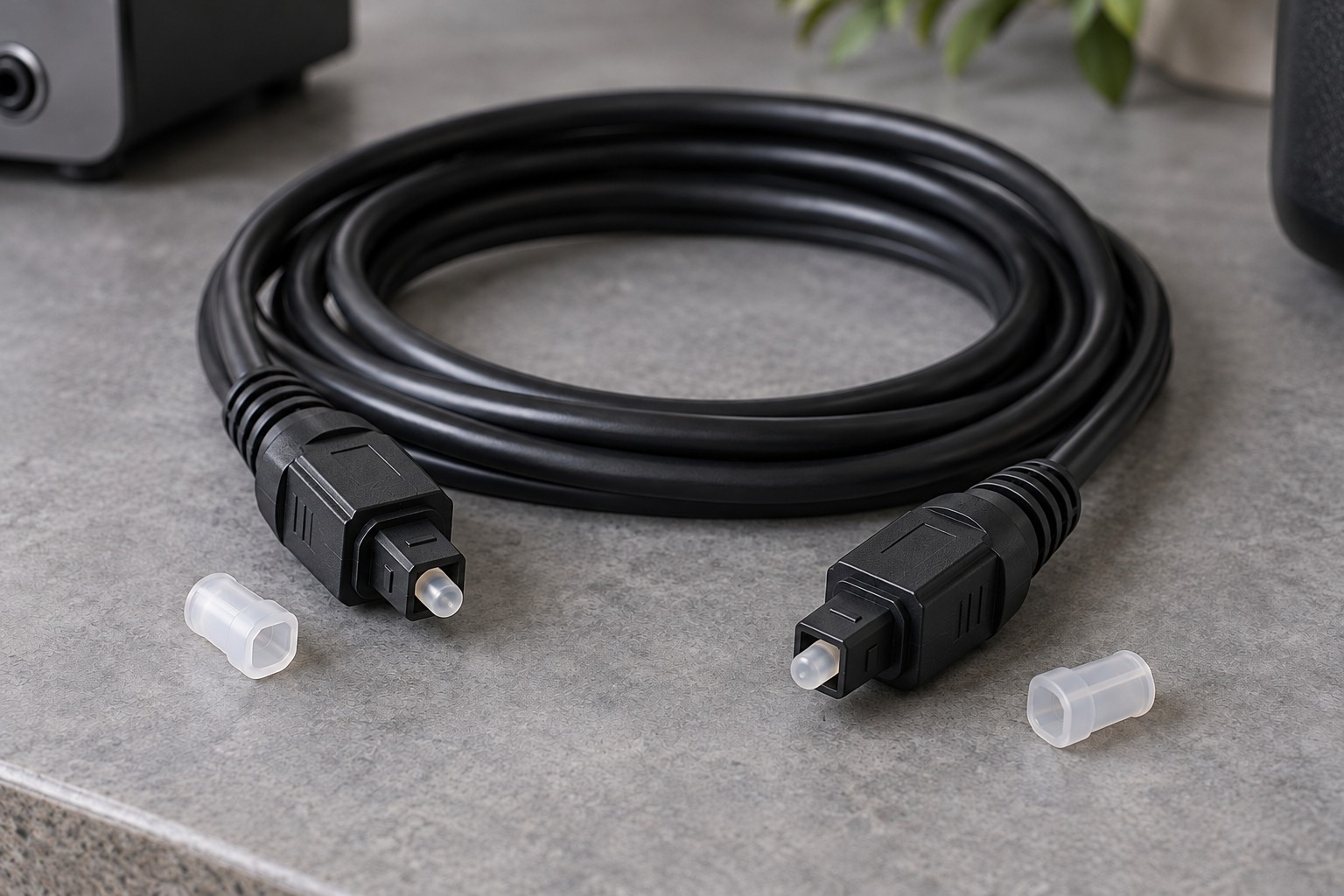
Follow output to input
Find the optical output on the source and the optical input on the sound system. The labels matter: two outputs cannot communicate with each other. Remove any protective caps from the cable ends and align the connector with the socket without forcing it. Leave a gentle cable route rather than a sharp bend behind the cabinet.
Select the optical input on the receiving device and the appropriate external-audio output on the source. Keep the listening level low during setup. A television may continue using its own speakers until its audio settings are changed, and the exact menu names vary by model.
Match the digital format
Check the formats supported by the receiver or powered speakers. A simple stereo DAC may accept stereo PCM but not a compressed surround format. Sony’s television guidance recommends PCM where the connected audio system does not support the relevant Dolby Digital or DTS signal. Use the instructions for the actual devices rather than assuming every optical input decodes every format.
Test more than one source of content. A television’s internal app, broadcast channel, and connected player may not all send audio in the same way. If one works and another does not, inspect the source and pass-through settings before buying another cable. Keep a note of the original setting so you can reverse a change that does not help.
Check the everyday controls
Determine which remote or knob changes the listening level. Some optical outputs are fixed-level, so the television volume buttons may not control the sound system as expected. Do not assume HDMI-style device control is carried by an optical audio connection. Test mute, input switching, and power cycling in the final arrangement.
Once playback works, label the selected input and leave enough access to inspect the cable later. If a plug becomes loose after moving furniture, reseat it gently and verify the settings before performing a factory reset. A systematic check of direction, input selection, and format is more informative than repeatedly replacing components without identifying which part of the route is failing.