Physical size is only the first check
Find the battery section of the device manual and note the permitted size, chemistry and number of cells. A compartment labeled with a familiar size does not by itself establish that every rechargeable product of that size is supported. Follow the device maker's compatibility information rather than relying on a retailer's general description.
Some equipment has a battery-type setting used to interpret the remaining-charge display. Check whether your device requires that selection and change it only as instructed. Do not assume that a displayed percentage will behave identically when a different approved chemistry is used.
For a device with an internal battery, use the specified charging method. A removable-cell charger is a separate purchase for a separate system. Keep those workflows distinct, especially when several devices travel together in one bag.
Build a matched charging routine
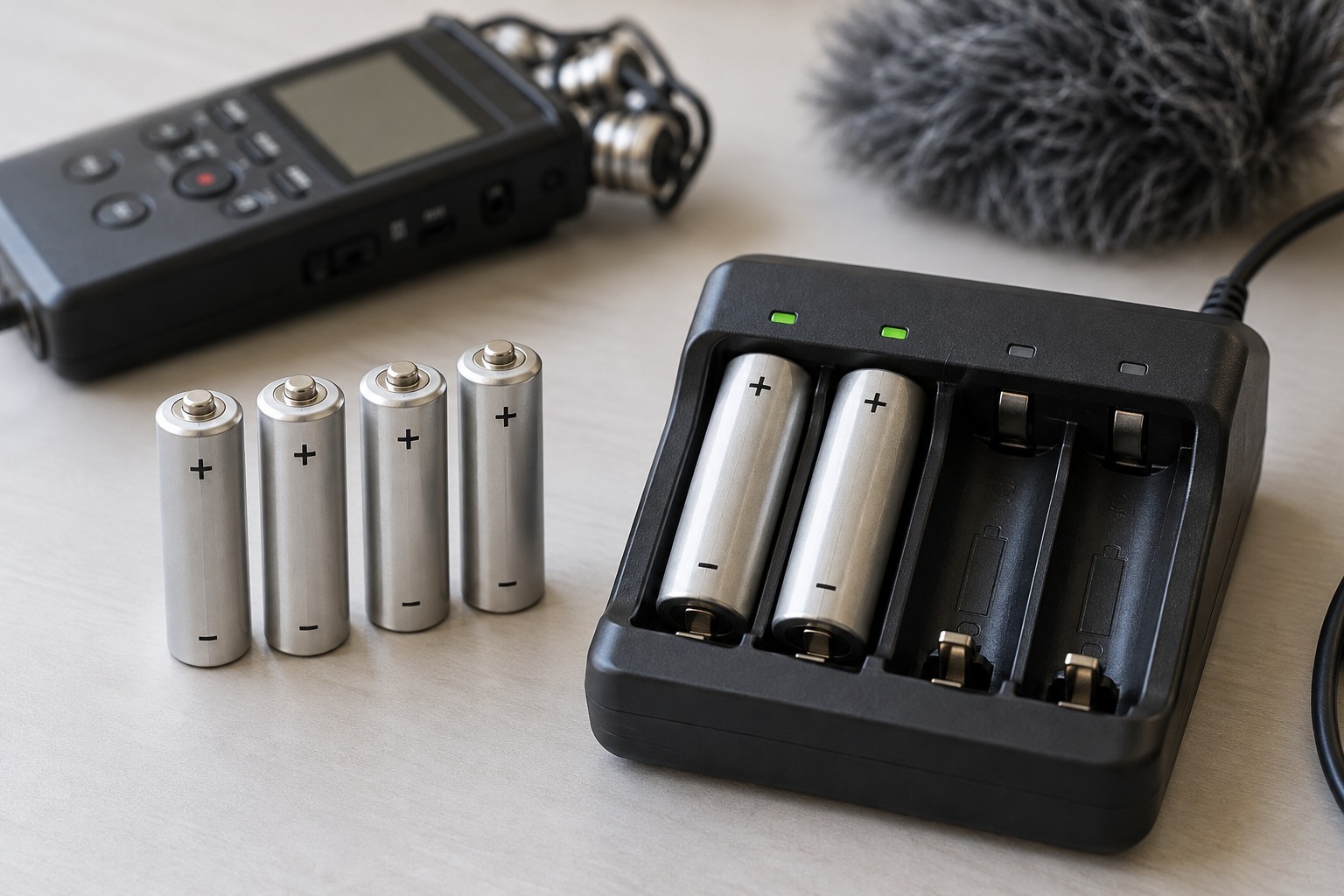
Select a charger explicitly compatible with the chosen cells and follow its instructions for slot use, charging conditions and fault indications. Never put non-rechargeable cells into it. A connector or slot that physically accepts an item does not prove electrical compatibility.
Panasonic's eneloop guidance advises against mixing cell types, capacities, ages or charge states within a device. Keep the cells used together as an identifiable set and follow the battery maker's replacement and charging guidance. This makes it easier to avoid combining a partly used pair with freshly charged spares during a hurried setup.
Use a suitable protective case for spare cells so that terminals cannot contact loose metal objects. Keep charged and used sets distinguishable without covering safety information or damaging the cell wrapper. If a cell is damaged or leaking, follow the manufacturer's handling and disposal instructions instead of returning it to service.
Plan around the actual session
Try the approved battery setup during an ordinary practice or recording session before depending on it for an important event. Note the device settings and the point at which its low-battery indication appears. Treat that observation as specific to the equipment and use pattern, not a universal runtime promise.
Pack enough appropriately stored spares for the intended session and confirm that charging is complete before departure. A higher advertised capacity is less useful than a reliable routine with compatible cells, a working charger and clear set identification. Include the charger only when there will actually be a suitable place and time to use it.
Store batteries and equipment under their manufacturers' stated conditions between sessions. Keep a short note of purchase dates and any recurring faults. If one set repeatedly behaves differently from the others, investigate it rather than moving its cells between sets until the problem becomes difficult to trace.