Where the conversion happens
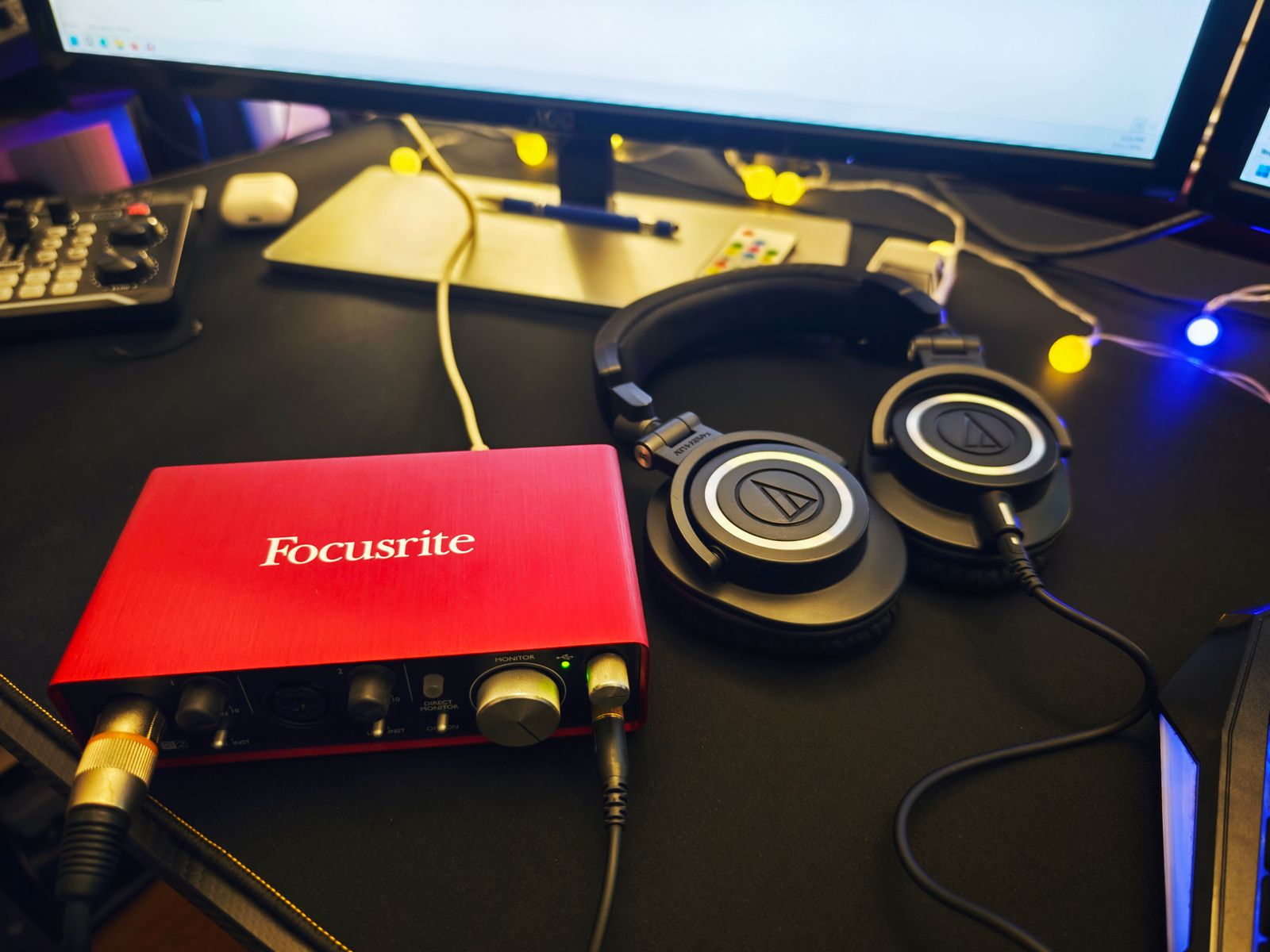
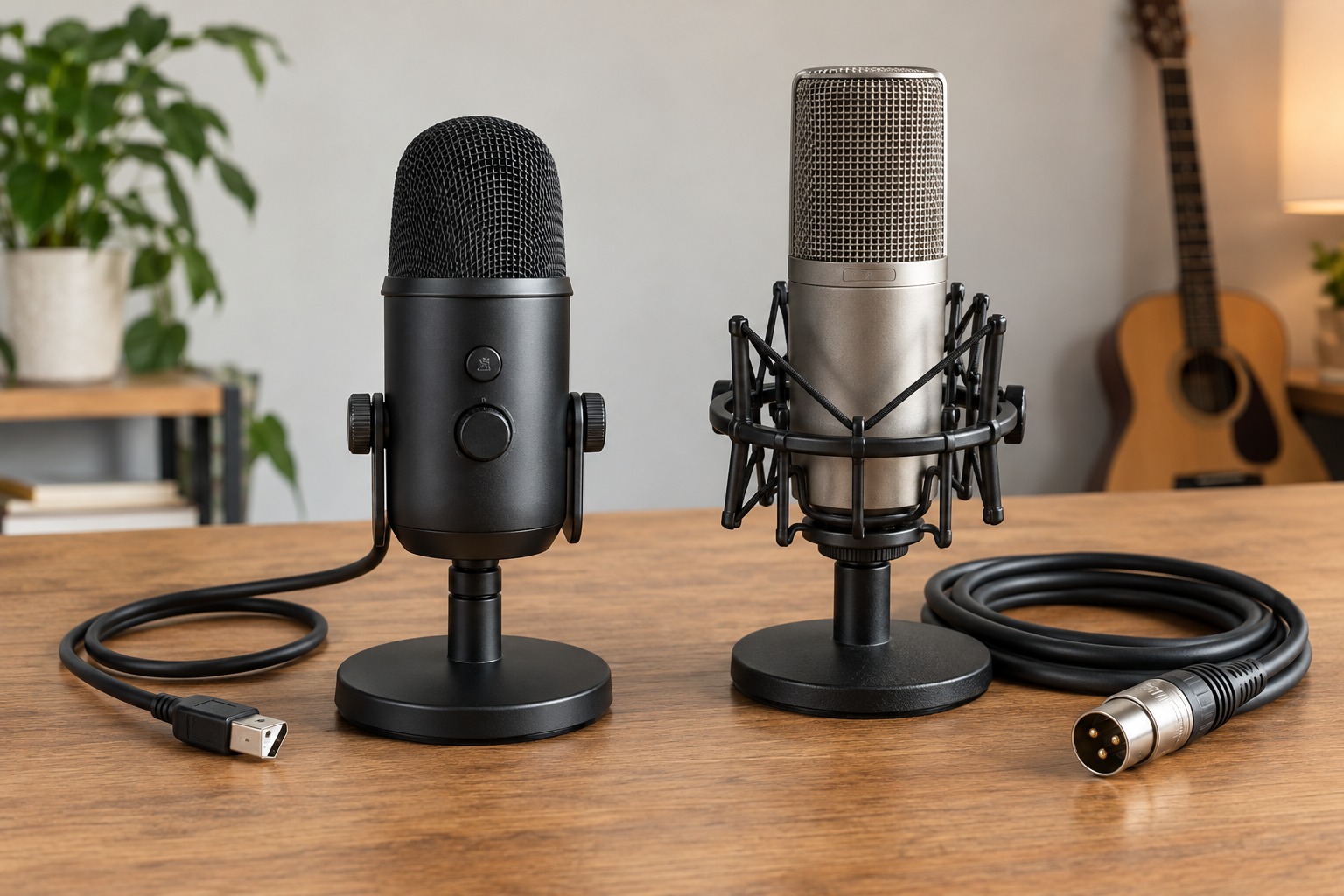
A USB microphone includes electronics that deliver digital audio to a compatible host. A conventional analog XLR microphone uses an external interface or recorder to provide the recording path. Some microphones offer both connections. RØDE’s explanation of its NT1 fifth generation notes that USB uses the microphone’s internal circuitry while XLR depends on the external preamp and interface.
That difference changes what you need to buy. A USB setup may require only a suitable cable, stand, and headphones, while an XLR setup also needs an appropriate interface and microphone cable. Count the complete system rather than comparing microphone prices alone. Check the host device’s compatibility and any required application before assuming a USB microphone works with every phone or tablet.
Count the people and instruments
For one voice at one computer, a USB microphone can be straightforward. If you want to record several microphones at once, an interface with suitable independent inputs may offer a clearer route. Multiple USB microphones are not automatically a single synchronized recording device; operating-system and application support must be checked for that arrangement.
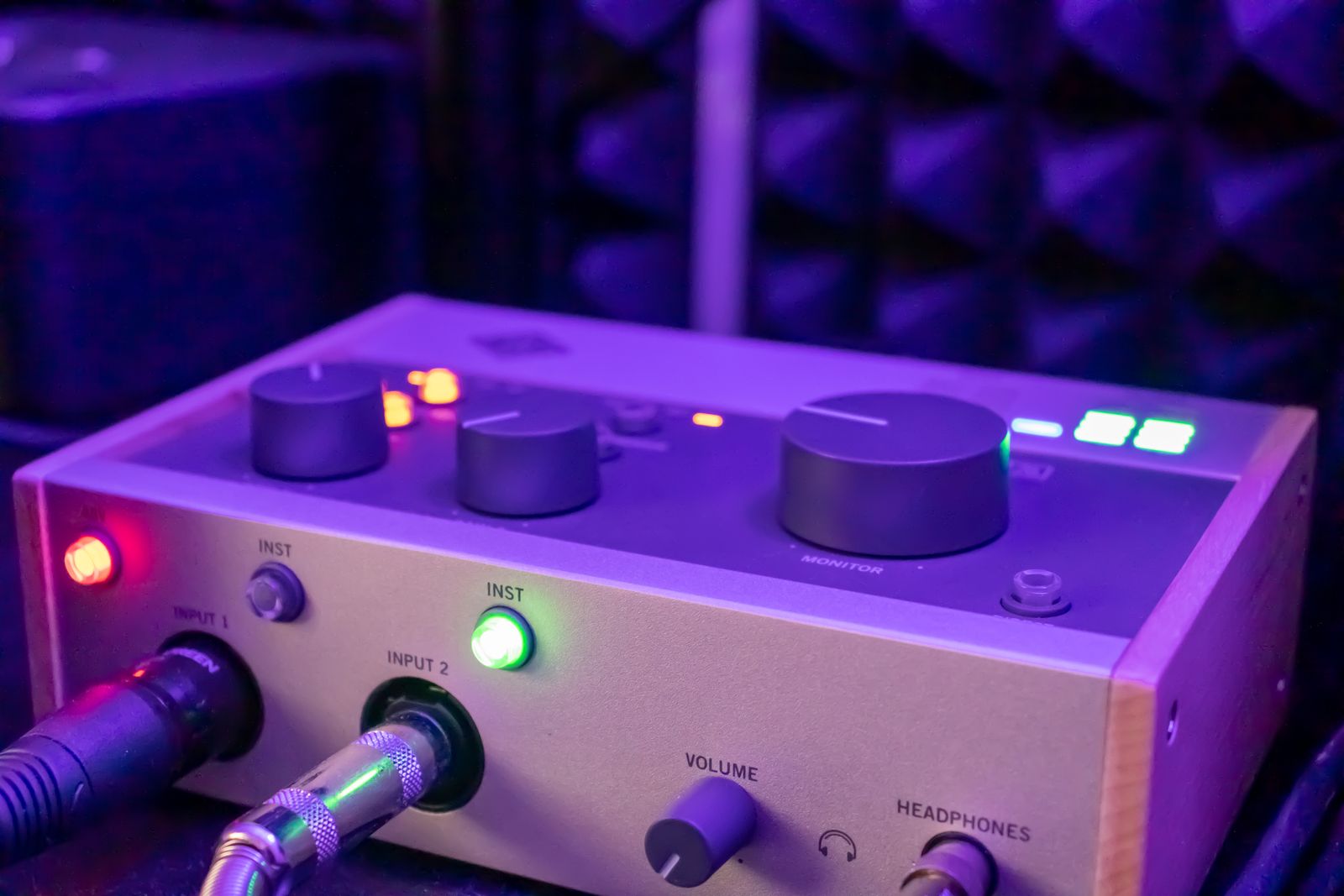
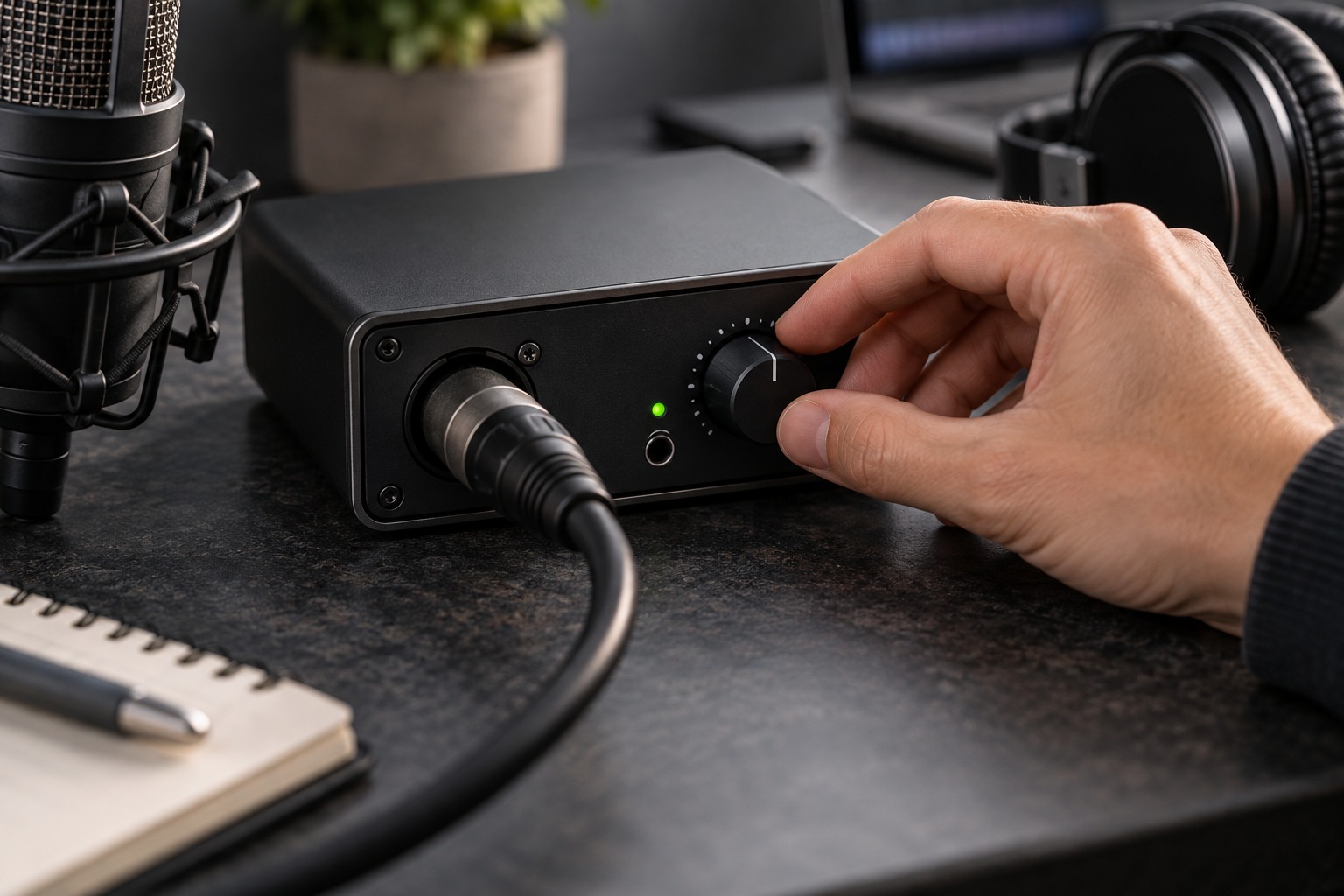
An XLR microphone can move between compatible interfaces, mixers, and recorders, but that flexibility brings setup decisions. Confirm the input type, available gain, and any required phantom power. A USB microphone’s built-in controls may be simpler, yet its routing and monitoring options still vary by model.
Inspect the controls you will touch
Look for a headphone output and understand whether it offers direct monitoring, computer playback, or a blend of both. Check mute behavior and whether gain is controlled on the microphone or in software. A control hidden on the back may be awkward if the microphone is mounted close to a screen.
Try a complete session: connect, select the device, record a short passage, save it, and reopen it. Then consider the next likely use. If one person will keep recording at the same desk, simplicity may dominate. If the setup will grow to several sources or move between recording systems, the external-interface arrangement may fit better. Neither connector is a quality grade by itself.