Separate routine dust removal from a deeper clean
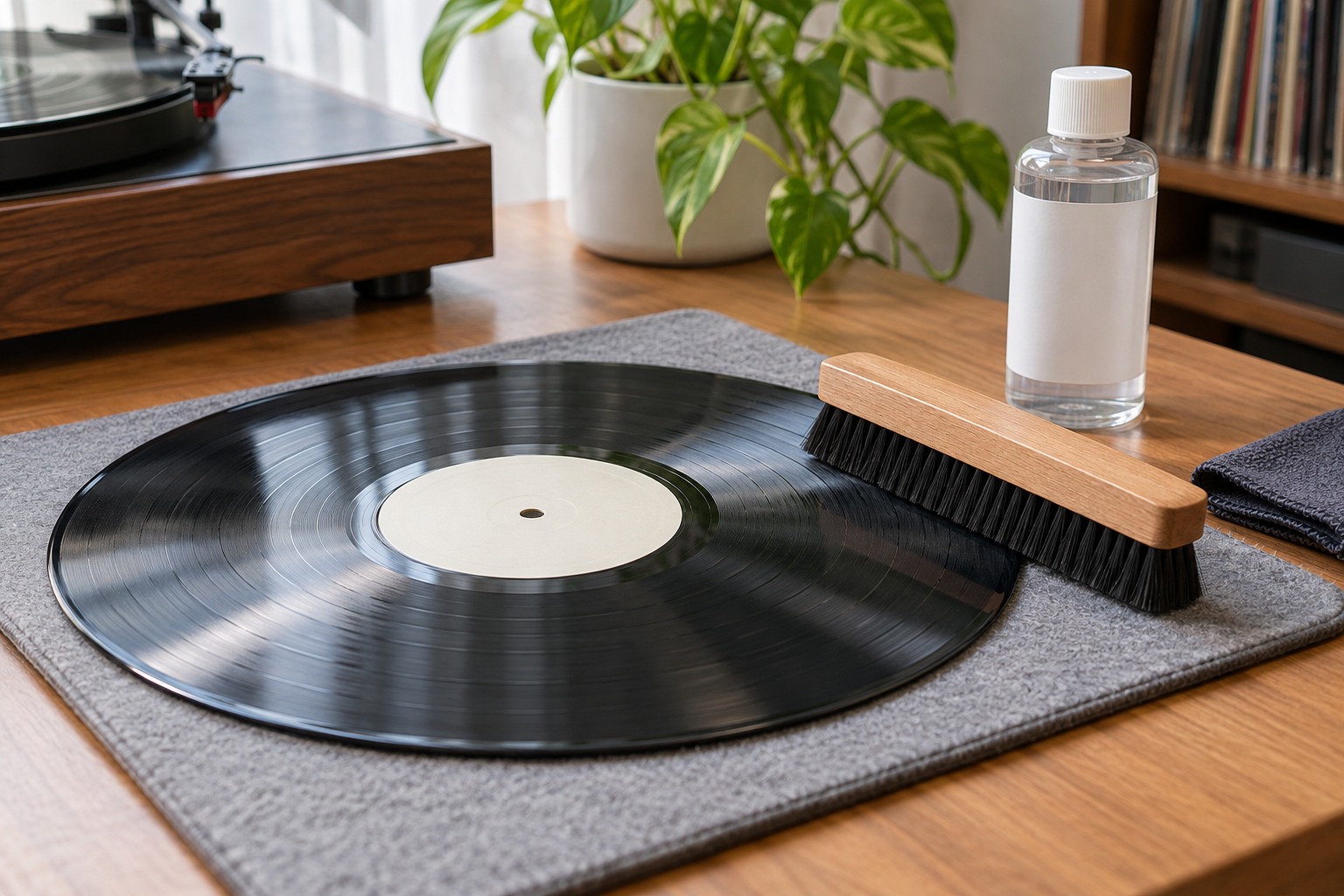
Identify what you are trying to remove. Loose surface dust, fingerprints and an unknown deposit are not the same task. Read the cleaning tool's instructions and its stated use before choosing between a dry brush, a cleaning pad or a more involved wet-cleaning system.
Manufacturer accessory ranges distinguish record brushes and record-care kits rather than presenting every tool as interchangeable. Audio-Technica's cartridge and accessory guide, for example, lists separate cleaning products. Use the instructions for the selected product, including any compatible fluid, rather than combining a brush from one system with an unrelated chemical.
Plan the work surface
Choose a clean stable area with enough room to handle the record without resting it on rough objects. Protect the label as required by the cleaning method and keep bottles securely upright away from electronics. A turntable should not automatically become the work surface for a process that its manufacturer has not approved.
Read the entire sequence before starting, including how the tool itself is cleaned and how the record dries. If the process requires a separate support or drying space, prepare it first. Leaving a wet disc in your hand while searching for somewhere to put it is a preventable complication.
Use only cleaning products specified for the record material and method. Do not assume that a recipe suitable for one type of record applies to every older format in a mixed collection. For a valuable or uncertain item, seek appropriate conservation or specialist advice before experimenting with a household solution.
Keep the tools from becoming the source of dirt
Inspect a brush or pad before each use and follow its maintenance instructions. A dirty tool can carry material from one record to the next. Keep cleaning tools covered or in a clean container, and do not use the same cloth for a dusty shelf and the playing surface.
Follow the stated direction, pressure and application method rather than pressing harder when a mark remains. Repeated force is not a substitute for a suitable process. If a record has a scratch or another physical defect, cleaning should not be presented as a guaranteed repair or a promise of silent playback.
Finish the storage step
Allow the record to dry fully as directed before putting it into a clean inner sleeve. Keep the sleeve opening accessible so the record can be inserted without dragging its surface along a folded edge. Replace a visibly contaminated sleeve rather than putting the cleaned disc back into the same dirty environment.
Use a short note if some records need a different process or further inspection. The routine should end with the record stored, the tools clean and the work area ready for the next use. That complete cycle is more useful than a collection of products that never quite reaches the putting-away stage.