Identify the wall construction
Find out whether the mounting location is solid masonry, a stud wall or another construction before choosing fixings. Use the hanger manufacturer's instructions and suitable hardware for that substrate and load. Supplied screws are not automatically appropriate for every wall. If you cannot identify the construction or hidden services, have the installation assessed by someone qualified.
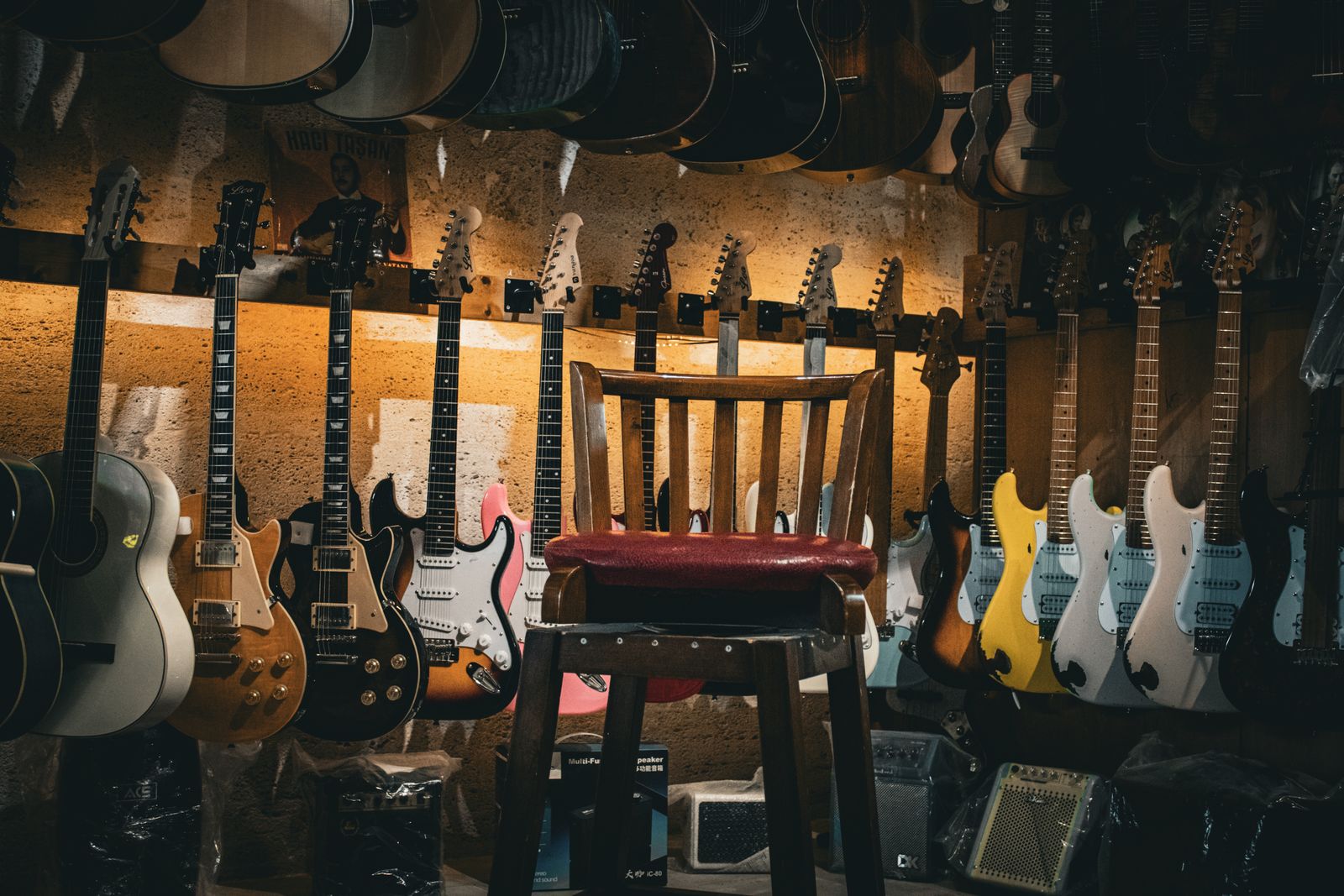
Plan the height with the whole guitar in mind. The body needs clearance below the hanger, and the headstock needs room above it for lifting the instrument in and out. Check the path of doors and nearby furniture. A location that displays the guitar well may still be awkward to reach while supporting its weight with both hands.
Test the headstock fit without relying on the wall
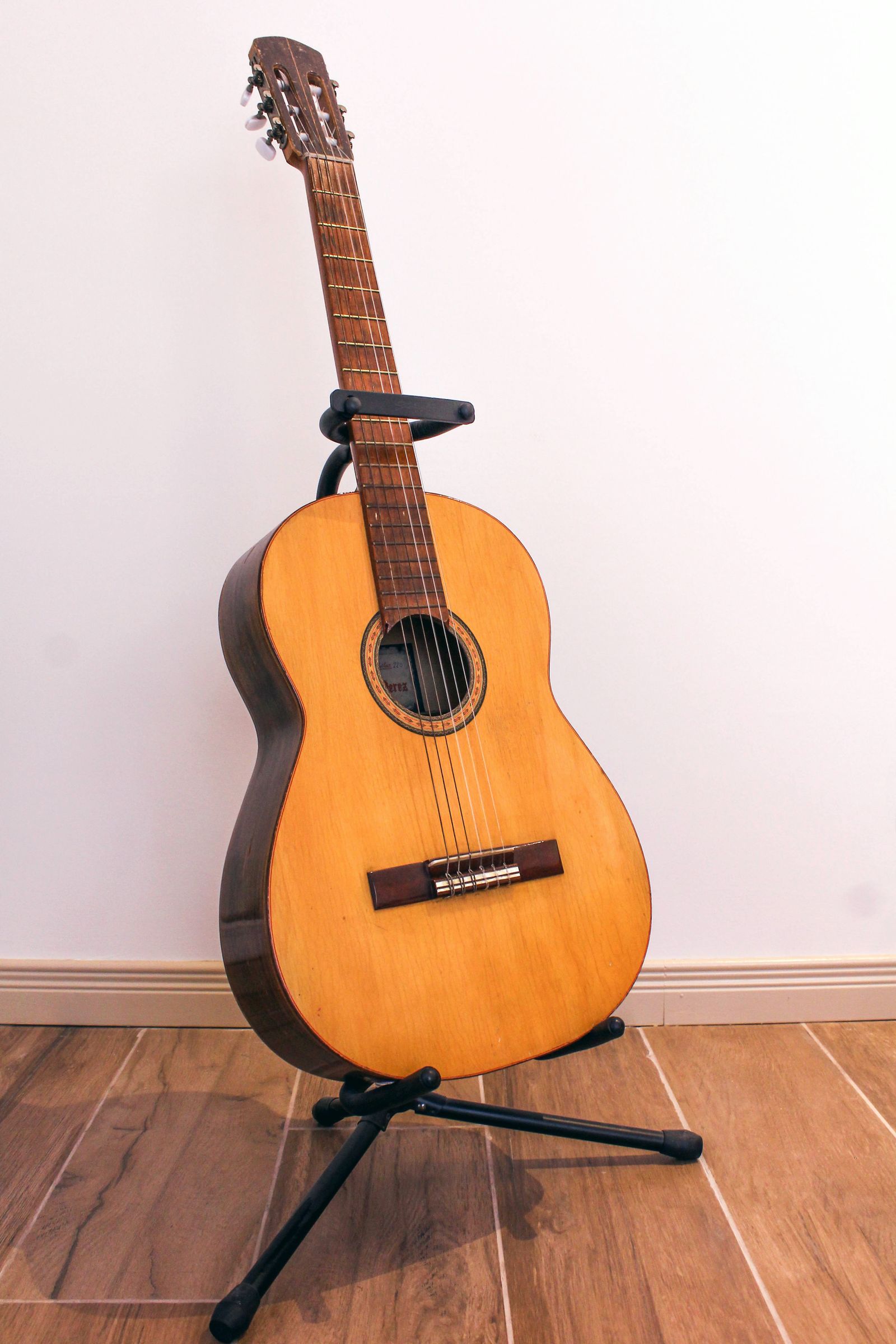
Compare the yoke opening with the neck and headstock, especially on asymmetric or compact designs. The headstock should be supported as the hanger maker intends, without a tuning key carrying the load. A rotating fork or automatic gate may help with some shapes, but only within its stated compatibility range.
Inspect the padding and verify finish compatibility with both manufacturers. K&M notes that even supports intended for sensitive finishes need attention to the guitar's finish condition. Do not treat a universal listing title as evidence about a newly refinished instrument or a finish you cannot identify.
Think about daily handling
Practice the lifting motion with the guitar supported. A high hanger that forces you to stretch or stand on furniture is not a convenient storage system. Keep cables and straps from catching as the instrument is lifted. If a locking gate is fitted, understand how it opens rather than tugging against it.
Avoid positions above equipment that would be damaged if the guitar were dropped during handling. Also consider heat from radiators, direct window sun and accidental contact from people passing. Wall mounting does not make environmental conditions irrelevant simply because the instrument is off the floor.
After installation, follow the specified inspection routine and check for movement, loose hardware or damaged support material. Stop using the hanger if anything shifts. The aim is not merely to hold the guitar once for a photograph; it is to provide a repeatable, controlled place to return it after practice.